
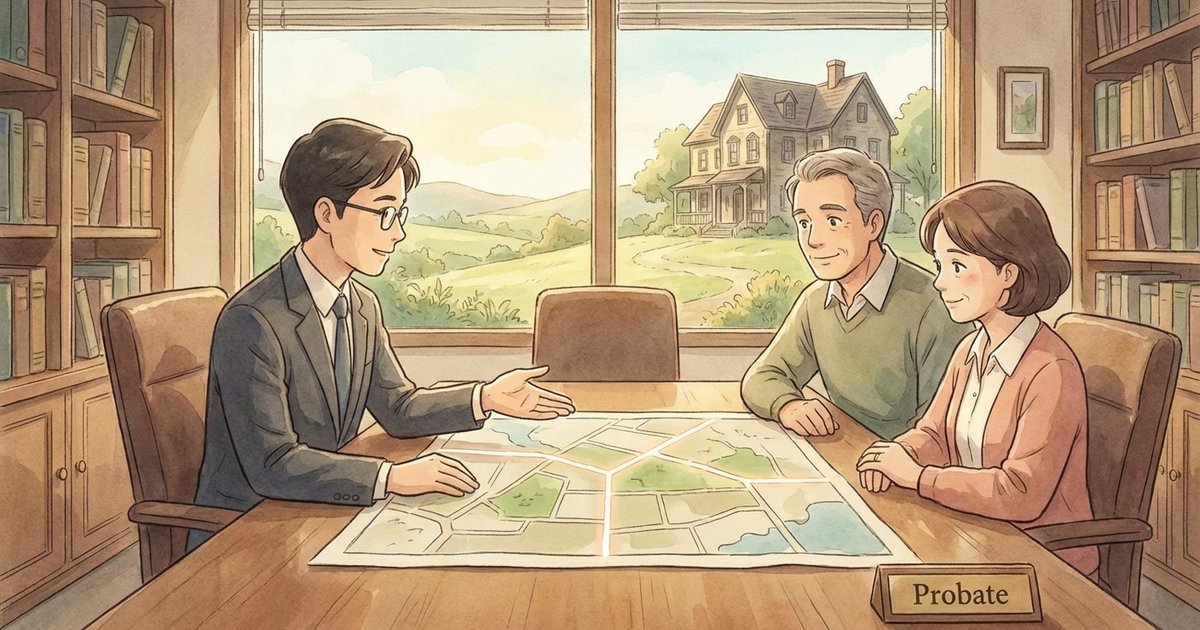
What happens in a North Carolina partition action for inherited real property, and how do appraisals affect the outcome? – South Carolina
Short Answer
In South Carolina, a partition action is a Court of Common Pleas case used to divide inherited, co-owned real estate either by physically dividing the land (partition in kind), awarding the property to one owner with a payment to the others (partition by allotment), or selling the property and dividing the proceeds (partition by sale). If the property qualifies as “heirs’ property,” the court usually sets a fair market value through a court-ordered appraisal (or another approved valuation method). That court-set value can drive whether a buyout happens, how much a buying co-owner must pay, and whether the case ends in a sale or a division.
Understanding the Problem
In South Carolina, when inherited real property ends up owned by multiple family members as tenants in common, disagreements can arise over whether the land should be divided, kept by one side of the family, or sold. The key question is what happens in a partition action in the Court of Common Pleas and how the property’s appraised value affects the court’s decisions and the financial outcome for each co-owner.
Apply the Law
South Carolina law allows co-owners (cotenants) to ask the Court of Common Pleas to partition property held in common ownership. The court can order (1) a physical division if it can be done fairly, (2) an allotment to one or more owners with an equalizing payment to the others, or (3) a sale with the proceeds divided by ownership shares. When the case involves “heirs’ property,” South Carolina has a structured process that typically requires the court to determine fair market value—often through a court-appointed, licensed appraiser—and that value becomes the baseline for buyouts and other decisions.
Key Requirements
- Co-ownership exists: The real estate must be owned by two or more people (commonly heirs who inherited without a clear plan to transfer title into one name).
- A requested remedy: A party generally asks for partition in kind, partition by allotment, or partition by sale, and the court decides what is fair and workable under the circumstances.
- A value determination (often by appraisal for heirs’ property): If the property is treated as heirs’ property, the court typically sets a fair market value (often after a court-ordered appraisal and a value hearing), and that value can control buyout pricing and later steps.
What the Statutes Say
- S.C. Code Ann. § 15-61-50 (Partition jurisdiction; in kind, allotment, or sale) – Gives the Court of Common Pleas authority to partition co-owned property by division, allotment with accounting, or sale if a fair division cannot be made without injury.
- S.C. Code Ann. § 15-61-360 (Heirs’ property; determination of value) – Requires the court to determine fair market value for heirs’ property, usually by appointing a disinterested, licensed appraiser, with notice, an objection period, and a value hearing.
- S.C. Code Ann. § 15-61-370 (Heirs’ property; cotenant buyout after value set) – Allows non-selling cotenants to buy the interests of cotenants who asked for a sale, using the court-determined value and a court-set payment deadline (not sooner than 60 days after notice).
- S.C. Code Ann. § 15-61-380 (Heirs’ property; partition in kind/allotment vs sale) – Directs the court to order partition in kind or allotment unless it would cause “manifest prejudice,” and allows equalizing payments to make shares proportionate.
- S.C. Code Ann. § 15-61-350 (Court may proceed without writ; testimony; sale if fair division not possible) – Confirms the court can decide practicability of division based on testimony and order a sale when a fair and equal partition cannot be made.
Analysis
Apply the Rule to the Facts: With inherited real property, the usual setup is multiple heirs holding fractional interests. If one heir wants out and another wants to keep the property, the court’s first major practical step (in an heirs’ property case) is often setting fair market value—commonly through a court-appointed appraisal and a value hearing. That value then becomes the math used to price a buyout (value × fractional share) and can strongly influence whether the case ends with a family buyout, a physical division, or a sale.
Process & Timing
- Who files: Any cotenant. Where: South Carolina Court of Common Pleas in the county where the property is located. What: A partition complaint requesting partition in kind, allotment, or sale. When: Timing depends on the case posture, but heirs’ property cases often move next into a court-supervised valuation step.
- Value gets set (often by appraisal): If the court treats the land as heirs’ property, it generally orders a fair market value determination. The court may appoint a disinterested, South Carolina-licensed appraiser, require a sworn appraisal to be filed, and then schedule a hearing to set value. Parties typically have 30 days to object after the appraisal notice is sent, and the court holds a value hearing not sooner than 60 days after the appraisal notice is sent.
- Buyout opportunity and then the partition remedy: If a cotenant requests partition by sale, other eligible cotenants may elect to buy the selling cotenant’s interest at the court-set value. If a buyout does not fully resolve the case, the court then decides whether to order a partition in kind/allotment or a sale, and it can order equalizing payments to make the division proportionate.
Exceptions & Pitfalls
- Assuming “appraisal = final word”: The court sets fair market value after a hearing. The court-ordered appraisal is important evidence, but the court may consider other value evidence at the hearing.
- Missing notice and election deadlines: Partition cases can move quickly once value is set. Missing the appraisal objection deadline or the buyout election/payment deadlines can remove options that would otherwise prevent a sale.
- Confusing “sale value” with “fractional payout”: In a buyout, the price is typically the court-determined whole-property value multiplied by the selling cotenant’s fractional interest, not a negotiated discount based on minority ownership.
- Overlooking allotment/equalizing payments: Even when a physical split is hard, the court may consider allotment with payments to balance value, which can be a middle path between “divide the dirt” and “sell everything.”
Conclusion
In South Carolina, a partition action for inherited real property is handled in the Court of Common Pleas and can end in a physical division, an allotment with equalizing payments, or a sale with proceeds divided by ownership shares. If the property is treated as heirs’ property, the court typically sets fair market value—often using a court-appointed appraisal—and that value drives buyout pricing and later decisions. A key next step is to file any appraisal objection within 30 days after the appraisal notice is sent.
Talk to a Probate Attorney
If inherited, co-owned real estate is headed toward a partition case—or an appraisal and buyout decision is approaching—our firm has experienced attorneys who can help explain the process, protect ownership rights, and track the deadlines that can affect whether the property is divided, bought out, or sold. For more background, see how selling a property works in a South Carolina partition action and options to divide or force the sale of co-owned farmland when heirs can’t agree in South Carolina.
Disclaimer: This article provides general information about South Carolina law based on the single question stated above. It is not legal advice for your specific situation and does not create an attorney-client relationship. Laws, procedures, and local practice can change and may vary by county. If you have a deadline, act promptly and speak with a licensed South Carolina attorney.

