
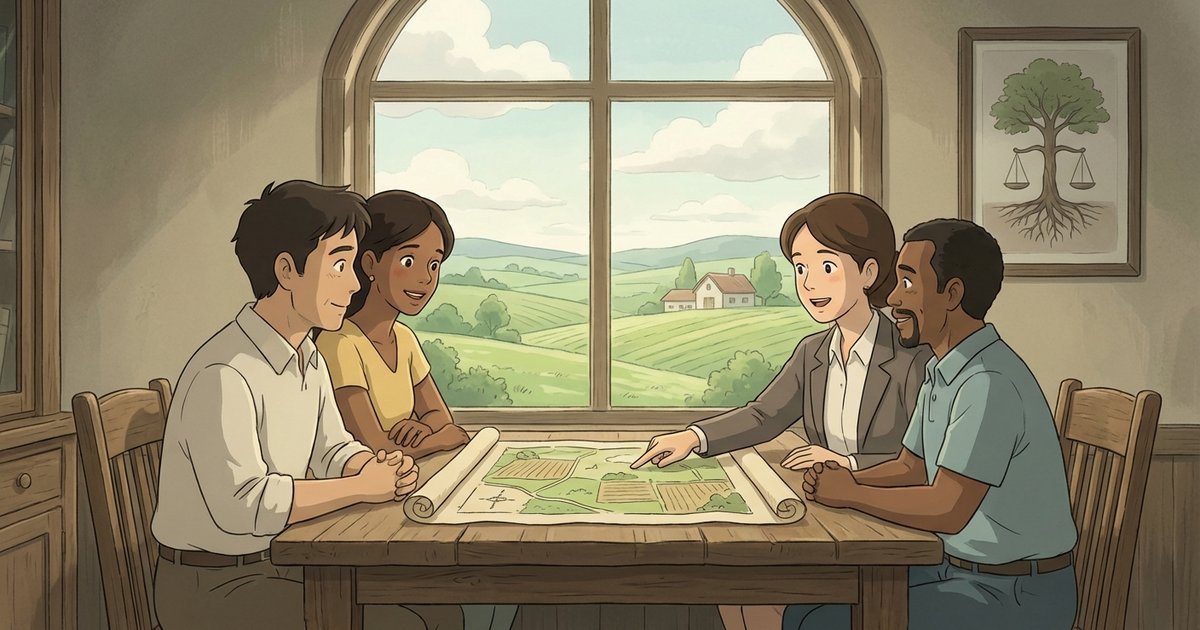
What options do I have to divide or force the sale of co-owned farmland when heirs can’t agree? – South Carolina
Short Answer
In South Carolina, co-owners of inherited farmland (often heirs who own as tenants in common) generally have two main paths when they cannot agree: a negotiated agreement (buyout, agreed sale, or agreed division) or a court-supervised partition case that can divide the land or order a sale. If the land qualifies as “heirs’ property,” South Carolina’s Uniform Partition of Heirs’ Property Act adds protections like an appraisal process, a buyout option for non-selling heirs, and a preference for open-market sales if a sale is ordered. If the farmland is still in an open probate estate, the probate court may also authorize a sale in certain situations.
Understanding the Problem
In South Carolina probate disputes, the core question is: when multiple heirs co-own farmland and cannot agree on what to do with it, can one heir force a division or sale, and what process controls? The decision point usually turns on whether the farmland is already owned by the heirs as co-tenants (after death and distribution) or whether it is still part of a decedent’s estate being administered in probate. The answer also depends on whether the court classifies the land as “heirs’ property,” which triggers a specific set of rules designed for inherited family land.
Apply the Law
South Carolina allows partition between co-owners such as joint tenants and tenants in common. In a partition case, the court first decides whether the land is “heirs’ property.” If it is, the case proceeds under South Carolina’s Clementa C. Pinckney Uniform Partition of Heirs’ Property Act, which sets out a structured process that emphasizes fair valuation, notice, and a chance for family members to buy out the interests of co-owners who want a sale.
Key Requirements
- Co-ownership of the farmland: The parties must hold title together (commonly as tenants in common after an owner dies without a clear plan for the land).
- A request for partition (division or sale): A co-owner can file a partition action asking the court to physically divide the land (partition in kind) or to order a sale and divide the proceeds (partition by sale).
- Heirs’ property determination and valuation steps (when applicable): If the court finds the land is “heirs’ property,” the case follows special rules that typically include a court-supervised value determination and a buyout opportunity before a sale is ordered.
What the Statutes Say
- S.C. Code Ann. § 15-61-10 (Partition; heirs’ property determination) – Allows partition between co-owners and requires the court to decide early whether the land is “heirs’ property.”
- S.C. Code Ann. § 15-61-310 (Short title; Uniform Partition of Heirs’ Property Act) – Establishes the South Carolina heirs’ property partition framework.
- S.C. Code Ann. § 15-61-330 (Preliminary heirs’ property determination) – Directs the court to decide whether the property is heirs’ property and, if so, apply the Act unless all co-owners agree otherwise in a record.
- S.C. Code Ann. § 15-61-370 (Buyout when a cotenant requests partition by sale) – Gives non-selling co-owners a structured chance to buy the interests of co-owners seeking a sale, with specific notice and payment timing built into the process.
- S.C. Code Ann. § 15-61-400 (If sale is ordered, how the sale happens) – Provides that a court-ordered sale of heirs’ property is generally an open-market sale, with broker appointment rules and sale alternatives if needed.
- S.C. Code Ann. § 62-3-1302 (Probate court authorization to sell real property) – Allows the probate court to authorize sale of a decedent’s real property as provided by the probate sale procedures.
- S.C. Code Ann. § 62-3-711 (Limits on personal representative selling real property) – Generally requires court authorization for a personal representative to sell estate real property unless a will authorizes otherwise.
Analysis
Apply the Rule to the Facts: The scenario involves heirs who co-own farmland and cannot agree, which commonly means the heirs hold title together and at least one heir wants a clear exit (a buyout, a division, or a sale). Under South Carolina law, that disagreement is exactly what a partition case is designed to resolve: the court can divide the land if feasible or order a sale and divide proceeds. If the farmland is “heirs’ property,” South Carolina’s heirs’ property rules can slow down a quick forced sale by requiring valuation steps and giving other heirs a defined chance to buy out the selling heir’s interest.
Process & Timing
- Who files: A co-owner (heir) who wants division or sale. Where: Typically the South Carolina Court of Common Pleas in the county where the farmland is located (partition is a real estate action tied to the land). What: A partition complaint requesting partition in kind or partition by sale, plus service on all co-owners. When: Often filed after title has passed to heirs; if the land is still in an open estate, a probate sale petition may be the first step instead.
- Early court decision: The court holds a preliminary hearing to decide whether the land is “heirs’ property.” If it is, the case follows the heirs’ property statute framework rather than the older partition rules.
- Valuation and buyout phase (heirs’ property cases): The court determines the property’s value through the statutory process, then co-owners who did not request a sale can elect to buy the interests of those who did request a sale. If the buyout happens, the court reallocates ownership and pays the selling co-owner from funds paid into court.
- If no buyout resolves it: The court decides whether to order a physical division or a sale. If a sale is ordered for heirs’ property, the statute generally calls for an open-market sale using a South Carolina-licensed broker, with court oversight of price and terms.
Exceptions & Pitfalls
- Probate vs. partition confusion: If the farmland is still titled in the decedent’s name and the estate is open, a partition case may be premature. The probate court sale process may control until the estate distributes the property.
- Title and “missing heirs” problems: Partition requires that all co-owners be identified and properly served. Unknown addresses, unclear family trees, or old deeds can delay the case and increase costs.
- Assuming a forced sale is automatic: In heirs’ property cases, the law builds in valuation and buyout protections and can favor solutions other than a quick courthouse sale.
- Not planning for farm use issues: Leases, crop arrangements, access roads, timber rights, and conservation restrictions can affect whether a physical division is practical and how value is determined.
- Informal “handshake” deals: Agreements among heirs should be documented. South Carolina’s heirs’ property statute allows co-owners to agree to opt out of the heirs’ property process only if they agree “in a record,” so documentation matters.
Conclusion
When heirs co-own farmland in South Carolina and cannot agree, the main legal options are (1) a negotiated solution (buyout, agreed sale, or agreed division) or (2) a court partition case that can divide the land or order a sale and split proceeds. If the court finds the land is “heirs’ property,” South Carolina law adds a value determination process and a buyout opportunity before a sale, and it generally uses an open-market sale if a sale is ordered. Next step: file a partition action in the county where the land sits (or, if the estate is still open, pursue the probate sale procedure first).
Talk to a Probate Attorney
If co-owned farmland is stuck because heirs cannot agree on a buyout, division, or sale, a probate attorney can help clarify whether the land is still in an estate or is heirs’ property, identify the best path (agreement, probate sale petition, or partition), and manage the deadlines and notice requirements that can affect leverage and outcomes.
Disclaimer: This article provides general information about South Carolina law based on the single question stated above. It is not legal advice for your specific situation and does not create an attorney-client relationship. Laws, procedures, and local practice can change and may vary by county. If you have a deadline, act promptly and speak with a licensed South Carolina attorney.

