
How does joint ownership between spouses affect my right to inherit a property when one spouse died first? – South Carolina
Short Answer
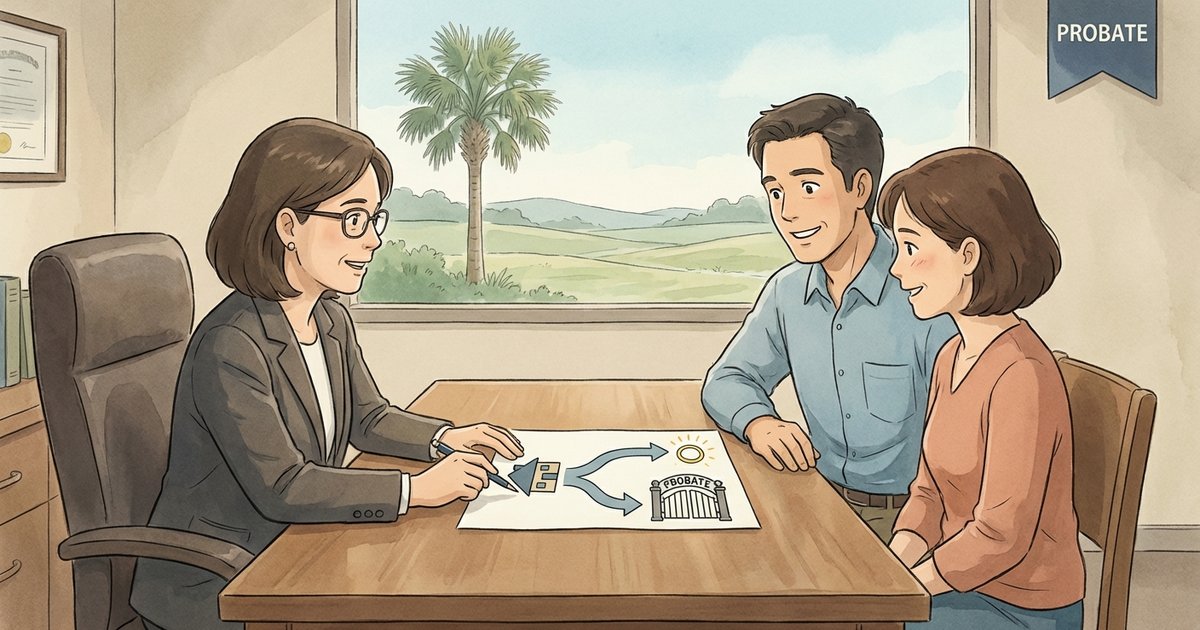
In South Carolina, the way spouses hold title usually decides whether the property transfers automatically or becomes part of the probate estate. If the deed creates a joint tenancy with right of survivorship, the surviving spouse typically becomes the sole owner by operation of law and the property usually does not pass through probate. If there is no survivorship language (or the spouses owned as tenants in common), the deceased spouse’s share generally passes through probate to heirs or beneficiaries.
Understanding the Problem
Under South Carolina probate law, the key question is whether a spouse can inherit a deceased spouse’s interest in a home (or other real estate) when both spouses were on the title and one spouse died first. The answer depends on the type of joint ownership shown on the deed, because some forms of co-ownership transfer automatically at death while others require a probate transfer. The same married couple can have very different outcomes depending on whether the deed includes survivorship wording.
Apply the Law
South Carolina recognizes joint ownership structures that can either (1) pass a deceased owner’s interest automatically to the survivor, or (2) leave the deceased owner’s share to be transferred through the probate process. For married couples, the most common decision point is whether the deed expressly creates a joint tenancy with right of survivorship or instead leaves the parties as tenants in common (or a joint tenancy without survivorship language). When survivorship applies, the surviving spouse generally receives the property outside probate; when it does not, the surviving spouse may inherit only through the will or the intestacy rules (and may also have elective-share rights in the probate estate).
Key Requirements
- How the deed is worded: For real estate, South Carolina looks closely at whether the deed expressly provides a right of survivorship (not just that both spouses are named).
- Whether survivorship applies at death: If the ownership includes a right of survivorship, the deceased spouse’s interest typically vests in the surviving spouse automatically, rather than passing through probate.
- Whether the property is part of the “probate estate”: If the deceased spouse’s interest does not transfer by survivorship, that interest generally becomes part of the probate estate and passes under a will or (if there is no will) under South Carolina intestacy rules.
What the Statutes Say
- S.C. Code Ann. § 27-7-40 (Joint tenancy with rights of survivorship in real estate) – Explains how a deed can conclusively create survivorship and how the survivor can record proof of death with the Register of Deeds.
- S.C. Code Ann. § 62-2-804 (Survivorship language and succession) – Addresses how survivorship wording affects whether a joint tenancy interest passes automatically or is treated as a tenancy in common at death.
- S.C. Code Ann. § 62-2-102 (Intestate share of surviving spouse) – If the deceased spouse’s interest is part of the intestate probate estate, sets the surviving spouse’s share (all if no surviving descendants; otherwise one-half).
- S.C. Code Ann. § 62-1-504 (120-hour survival rule for co-owners with survivorship) – Requires proof that one survivorship co-owner survived the other by at least 120 hours in certain situations; otherwise the property may be split between estates.
Analysis
Apply the Rule to the Facts: When spouses jointly own a property and one spouse dies first, the inheritance result turns on the deed. If the deed says the spouses hold title “as joint tenants with right of survivorship,” the surviving spouse typically becomes the owner automatically and the property usually does not pass through probate. If the deed does not include survivorship language (or the spouses owned as tenants in common), the deceased spouse’s share generally must be transferred through probate under a will or South Carolina intestacy rules.
Process & Timing
- Who acts: Usually the surviving spouse (or the personal representative if probate is needed). Where: For title records, the Register of Deeds in the county where the property is located; for probate, the South Carolina Probate Court in the county where the decedent lived (or where property is located in some situations). What: If survivorship applies, record a certified death certificate (and any required affidavit forms used locally) to update the land records; if survivorship does not apply, open an estate and transfer the deceased spouse’s interest by the appropriate probate document (often a deed from the personal representative or a court-approved transfer).
- Confirm the deed language: Review the recorded deed to confirm whether it includes survivorship wording. If the deed is unclear or uses mixed language, a title review may be needed before any sale or refinance.
- Complete the transfer: If survivorship applies, the land records update supports clear title in the surviving spouse. If probate applies, the estate administration must reach the point where the personal representative has authority to convey or distribute the real estate interest.
Exceptions & Pitfalls
- Deed does not clearly create survivorship: If the deed does not expressly provide survivorship, the deceased spouse’s share may be treated as passing through probate rather than automatically to the surviving spouse.
- Close-in-time deaths: If it cannot be proven that one spouse survived the other by at least 120 hours in a survivorship arrangement, the property may be divided between the two estates instead of passing entirely to one spouse.
- Assuming “married” automatically means survivorship: South Carolina does not treat marriage alone as creating a special survivorship form of title for real estate; the deed wording matters.
- Probate share vs. non-probate transfer: Intestacy shares (and many spouse protections) apply to the probate estate. Property that passes by survivorship often transfers outside probate, which can change what is available to distribute under a will or intestacy.
Related reading: How to avoid probate in South Carolina for property held in joint tenancy with right of survivorship and what happens to joint bank accounts and jointly owned property if someone dies without a will in South Carolina.
Conclusion
In South Carolina, joint ownership between spouses can either transfer a property automatically at death or send the deceased spouse’s share into probate. If the deed creates a joint tenancy with right of survivorship, the surviving spouse typically becomes the owner by operation of law. If the deed lacks survivorship language (or the spouses owned as tenants in common), the deceased spouse’s share generally passes through probate under a will or intestacy rules. Next step: obtain and review the recorded deed, then file the appropriate death-related recording with the county Register of Deeds if survivorship applies.
Talk to a Probate Attorney
If a spouse died and the home (or other real estate) was titled in both names, a probate and title review can clarify whether the property transfers automatically or requires an estate administration. Our firm has experienced attorneys who can help identify the ownership type, explain the probate impact, and map out the steps and timelines to clear title.
Disclaimer: This article provides general information about South Carolina law based on the single question stated above. It is not legal advice for your specific situation and does not create an attorney-client relationship. Laws, procedures, and local practice can change and may vary by county. If you have a deadline, act promptly and speak with a licensed South Carolina attorney.

