
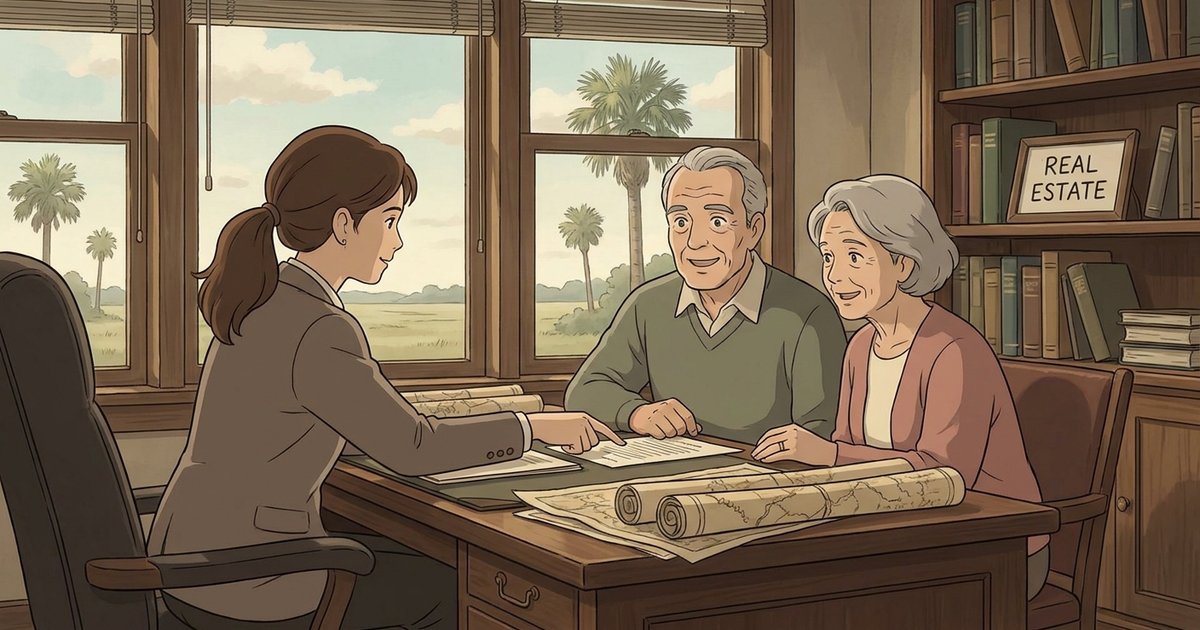
If family members are living on the property, how does that affect ownership rights and what steps we can take next? – South Carolina
Short Answer
In South Carolina, family members living on a property do not automatically gain full ownership just because they live there. Occupancy may matter as evidence of possession, contribution, or notice, but ownership usually turns on the deed, the chain of title, probate history, and whether the property is held by co-owners as heirs’ property. The next step is usually to confirm title through a full deed and probate review, then decide whether a quiet title or partition case is needed.
Understanding the Problem
In South Carolina, the main question is whether relatives who are living on inherited or family land have ownership rights beyond whatever interest appears in the title records. The issue often comes up when property passed through several generations, deeds may overlap, and one or more family members stayed in possession while others did not. The answer depends on who actually holds title, whether the occupants are co-owners, and whether court action is needed to sort out unclear ownership.
Apply the Law
Under South Carolina law, living on the property and owning the property are not the same thing. A person may occupy family land as a co-owner, a permissive occupant, or someone claiming a larger interest than the records show. When title is unclear because of multiple deeds, missing estate administration, or conflicting transfers, the usual forums are the county Clerk of Court or Court of Common Pleas for a title-related action, and the county land records office for deed review. If the land is owned by relatives as tenants in common, a partition action may be available, and the court must decide whether the land is heirs’ property.
Key Requirements
- Recorded ownership: The starting point is the deed chain, not who has been living there. A signed and recorded deed, probate transfer, or court order usually controls ownership rights.
- Type of possession: A family member’s occupancy may support a claim of use or possession, but if that person lived there with family permission, occupancy alone usually does not cut off other co-owners’ rights.
- Proper court remedy: If the problem is unclear or conflicting title, a quiet title action may be needed. If the owners are confirmed but cannot agree on use or sale, a partition action may be the next step.
What the Statutes Say
- S.C. Code Ann. § 15-67-10 (Action to Determine Adverse Claim) – allows a person in possession, or a person claiming title to vacant land, to bring an action to determine adverse claims and the parties’ rights.
- S.C. Code Ann. § 15-61-10 (Partition Between Joint Tenants and Tenants in Common) – allows co-owners to compel partition and provides that, in a partition action, the court must determine in a preliminary hearing whether the property is heirs’ property.
- S.C. Code Ann. § 15-61-320 (Heirs’ Property Definitions) – defines heirs’ property and explains when family-owned tenancy-in-common property falls under South Carolina’s special partition rules.
- S.C. Code Ann. § 15-61-330 (Preliminary Heirs’ Property Determination) – requires the court to hold a preliminary hearing to decide whether the property is heirs’ property in a partition case.
- S.C. Code Ann. § 15-61-400 (Sale of Heirs’ Property) – if a sale is ordered, the sale must be an open-market sale unless the court finds that sealed bids or an auction would be more economically advantageous and in the best interest of the cotenants as a group.
Analysis
Apply the Rule to the Facts: Here, the reported problem is a family property in South Carolina that passed through multiple generations, with an unclear chain of title and possibly overlapping deeds signed before a prior owner died. Those facts suggest that the first issue is not whether the relatives living there automatically own the property, but whether they are already owners under a valid deed or inheritance path. If the occupants are among several heirs, they may have the same basic ownership rights as other co-owners, but living there alone usually does not give them the whole property. If the deeds conflict, a court may need to determine which transfers were valid before any sale, division, or buyout can move forward.
If one branch of the family has remained in possession for years while other relatives stayed away, that history may affect the evidence, but it does not by itself erase the others’ interests. In family land disputes, long occupancy is often treated differently from hostile possession because relatives frequently stay on the property with informal permission. That makes title review, probate review, and the wording and timing of each deed especially important. For a broader discussion of title cleanup, see how to clear title problems on South Carolina heir property after a quitclaim deed.
Process & Timing
- Who files: a person claiming an ownership interest, a co-owner, or a person in possession with a title claim. Where: usually the South Carolina Court of Common Pleas in the county where the property is located. What: a complaint to quiet title under South Carolina law if ownership is disputed, or a partition action if ownership is known but the co-owners need the property divided or sold. When: there is no single universal filing deadline for every title dispute, so action should be taken promptly once overlapping deeds, probate gaps, or competing claims are discovered.
- Next, the parties usually gather the full deed chain, probate filings, death records, tax records, and any surveys or plats. If a partition case is filed, the court must hold a preliminary hearing to decide whether the land is heirs’ property, which changes the procedure and adds protections for family co-owners.
- Final step: the court may enter an order declaring ownership shares, clearing adverse claims, or directing partition in kind, allotment, buyout procedures, or sale depending on the record and the type of case filed. If the land qualifies as heirs’ property and sale becomes necessary, the sale must be open-market unless the court finds that sealed bids or an auction would be more economically advantageous and in the best interest of the cotenants as a group.
Exceptions & Pitfalls
- A family member who lives on the property may be a co-owner, but may also be there only with permission. Those are very different positions, and the deed record usually decides the difference.
- One common mistake is assuming tax payments, repairs, or exclusive occupancy automatically transfer title. Those facts may matter, but they do not replace a valid deed or court order.
- Another common problem is trying to use a new deed before confirming what interest the signer actually owned. If earlier deeds overlapped or a signer deeded property before death without clear authority, later transfers may not fix the title problem. For related guidance, see how to confirm legal ownership for a multi-heir property sale in South Carolina and co-owner rights in South Carolina when one heir wants to live in the inherited home and another wants to sell.
Conclusion
In South Carolina, family members living on the property do not gain ownership just by staying there; ownership usually depends on the deed chain, probate history, and whether the occupants are co-owners in heirs’ property. When multiple generations and overlapping deeds cloud title, the key next step is to file the right court action in the county where the property sits to confirm ownership shares and clear title before any division or sale moves forward.
Talk to a Real Estate Attorney
If a family property has passed through several generations and relatives are living on the land while title remains unclear, our firm can help review the deed history, identify ownership claims, and explain the next steps and timelines under South Carolina law.
Disclaimer: This article provides general information about South Carolina law based on the single question stated above. It is not legal advice for your specific situation and does not create an attorney-client relationship. Laws, procedures, and local practice can change and may vary by county. If you have a deadline, act promptly and speak with a licensed South Carolina attorney.

