
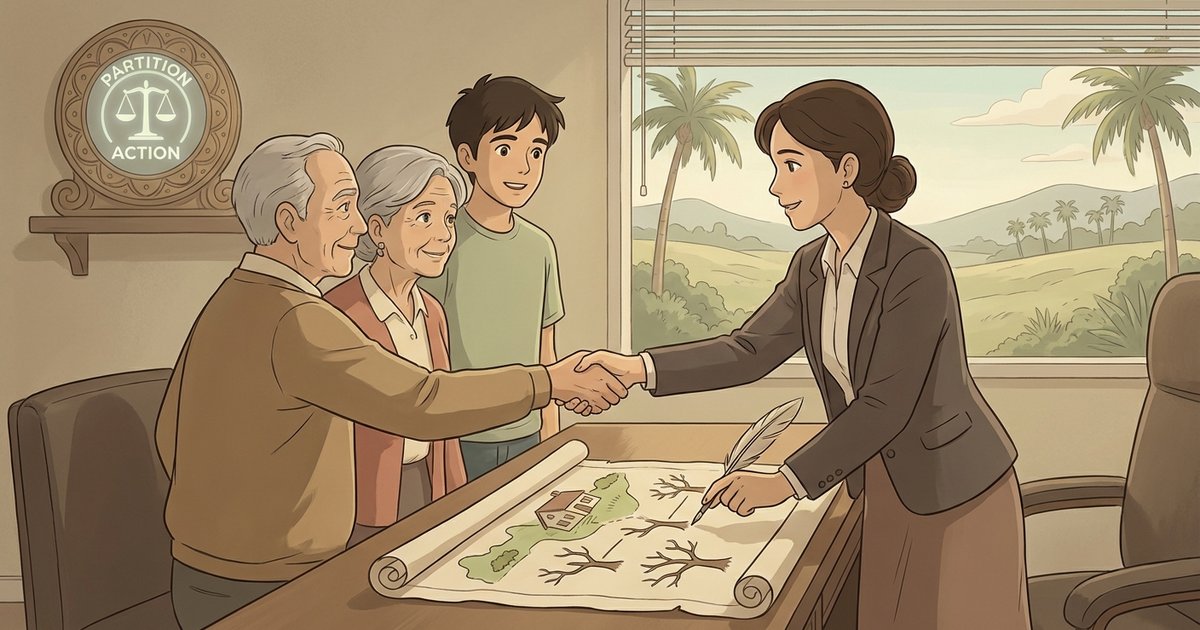
How do I confirm legal ownership when multiple heirs are involved in a property?: Clear title steps for an heirs’ property sale in Southern Pines – South Carolina
Short Answer
In South Carolina, confirming legal ownership for an “heirs’ property” sale usually means (1) identifying every current co-owner (all heirs who inherited an interest), (2) proving how each person got that interest (will, intestacy, deeds), and (3) getting a court order or recorded documents that a title company will accept for closing. When heirs do not all agree or cannot be located, a partition action in the Court of Common Pleas is often the cleanest way to establish who owns what and to sell the property with clear title.
Understanding the Problem
Under South Carolina law, the core question is: how can a group of heirs confirm who legally owns an inherited property (and in what percentages) so the property can be sold with clear title when multiple heirs are involved. This issue usually comes up when a prior owner died and the deed was never updated, or when ownership passed through several deaths and the current owners are spread across different branches of a family. The decision point is whether the ownership can be confirmed and consolidated through cooperative paperwork and probate steps, or whether a court case is needed to establish ownership and authorize a sale.
Apply the Law
In South Carolina, inherited real estate commonly ends up owned by multiple heirs as tenants in common. If the property meets the statutory definition of “heirs’ property,” South Carolina’s Uniform Partition of Heirs’ Property Act applies in a partition case and adds specific protections and procedures before a forced sale can happen. A partition action is filed in the Court of Common Pleas, and the court must make an early determination whether the land is “heirs’ property.”
Key Requirements
- Identify every current co-owner: Ownership must be traced from the last deeded owner to the present day, including each death, will (if any), and the heirs under intestacy if there was no will.
- Prove the chain of title and heirship: Clear title typically requires recorded proof (probate filings, deeds, and sometimes sworn heirship information) showing how each heir received an interest.
- Use the correct court process if heirs do not agree: If all co-owners cannot or will not sign a sale deed, a partition action can ask the court to confirm the parties’ interests and either divide the land or order a sale under the heirs’ property rules.
What the Statutes Say
- S.C. Code Ann. § 15-61-10 (Partition; determination of heirs’ property) – Allows partition among co-owners and requires a preliminary court determination of whether the property is “heirs’ property.”
- S.C. Code Ann. § 15-61-310 (Uniform Partition of Heirs’ Property Act short title) – Establishes South Carolina’s heirs’ property partition framework for cases filed on or after January 1, 2017.
- S.C. Code Ann. § 15-61-320 (Definitions, including “heirs’ property”) – Defines “heirs’ property” and related terms used in these partition cases.
- S.C. Code Ann. § 15-61-330 (Preliminary determination; Article 3 controls) – Requires the court to decide early whether the property is heirs’ property and, if so, to apply the Act unless all co-owners agree otherwise in a record.
- S.C. Code Ann. § 15-61-370 (Co-owner buyout option) – Gives non-selling co-owners a structured opportunity to buy out the interests of co-owners seeking a sale, with specific timing rules once value is determined.
- S.C. Code Ann. § 15-61-400 (Sale method; open-market sale default) – If the court orders a sale, the default is an open-market sale through a licensed broker unless another method is better for the co-owners as a group.
Analysis
Apply the Rule to the Facts: With multiple heirs involved, legal ownership is confirmed by matching each heir to a documented path from the last deeded owner to the present (through probate and recorded instruments) and then confirming each person’s fractional share. If some heirs are missing, disagree, or refuse to sign, a partition action can bring everyone into one case so the court can determine whether the land is “heirs’ property,” identify the co-owners, and set the process for division or sale. If the goal is a sale, the heirs’ property rules can affect how the sale happens and can create a buyout opportunity for co-owners who want to keep the land.
Process & Timing
- Who files: Any co-owner (heir with an ownership interest). Where: South Carolina Court of Common Pleas in the county where the property is located. What: A partition lawsuit (complaint) naming all known co-owners and addressing unknown/unlocated parties as needed. When: As soon as it becomes clear that all owners cannot sign a deed for a voluntary sale or that title issues will block closing.
- Early court step: The court holds a preliminary hearing to determine whether the property is “heirs’ property.” If it is, the case proceeds under the Uniform Partition of Heirs’ Property Act procedures rather than the general partition rules.
- Sale pathway (if a sale is requested/ordered): The court addresses valuation and, if a sale is ordered, the default method is an open-market sale through a licensed broker, with court oversight of the listing and reporting process.
Exceptions & Pitfalls
- “Heirs’ property” is a defined term: Not every inherited co-ownership qualifies. If the statutory definition is not met, the case may proceed under the general partition rules instead of the heirs’ property procedures.
- Unknown heirs and service problems: A sale can be delayed or attacked later if parties are not properly identified and served. Skipping diligent search steps or using the wrong service method is a common reason cases stall.
- Title-company closing requirements: Even when the family “knows” who the heirs are, a buyer’s lender and title insurer usually require recorded proof. Informal family agreements often do not create marketable title.
Conclusion
In South Carolina, confirming legal ownership for a multi-heir property sale usually requires documented proof of each heir’s interest and, when cooperation is not possible, a partition action in the Court of Common Pleas. If the court finds the land is “heirs’ property,” the Uniform Partition of Heirs’ Property Act controls key steps, including procedures that can affect whether and how a sale occurs. The most practical next step is to file a partition action in the county where the property sits and promptly meet the court’s early “heirs’ property” determination schedule.
Talk to a Partition Action Attorney
If an inherited property has multiple heirs and a sale is being delayed by unclear ownership, missing signatures, or title problems, our firm has experienced attorneys who can help explain the partition process, confirm who must be included in the case, and map out the timelines needed to reach a sale that can close.
Related reading: How to Locate or Handle Unknown Heirs in a South Carolina Property Partition Lawsuit, How to Prepare an Heirship Affidavit in South Carolina, and How to Clear Title Problems on South Carolina Heir Property After a Quitclaim Deed.
Disclaimer: This article provides general information about South Carolina law based on the single question stated above. It is not legal advice for your specific situation and does not create an attorney-client relationship. Laws, procedures, and local practice can change and may vary by county. If you have a deadline, act promptly and speak with a licensed South Carolina attorney.

