
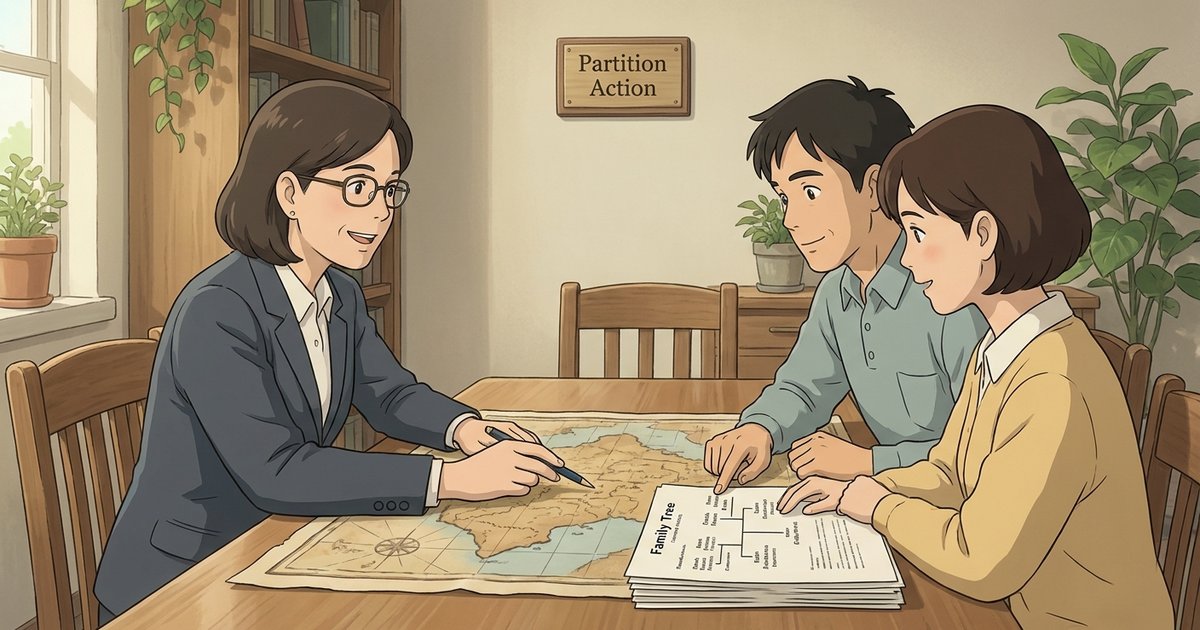
How do I respond to a partition lawsuit if I agree the land can be sold but the paperwork lists the wrong heirs and misspells names? – South Carolina
Short Answer
In South Carolina, a person served with a partition lawsuit should file a timely written response in the Court of Common Pleas even if that person agrees the land may be sold. The response should admit the parts that are correct, deny or state lack of knowledge about the wrong heirship allegations, and ask the court to correct misspelled names and add or address any missing heirs or other parties with an ownership interest. In heir-property cases, getting the parties and ownership shares right matters because the court must determine who the cotenants are before it can divide the property or approve a sale.
Understanding the Problem
The question is whether a person named in a South Carolina partition case can agree that inherited land should be sold while still formally disputing errors in the petition about who the heirs are and how their names are listed. In a partition action, the key issue is not only whether the property should be sold, but also whether the court has the correct owners and ownership interests before moving forward. That means the response must address both the requested sale and the accuracy of the parties named in the case.
Apply the Law
South Carolina partition cases are filed in the Court of Common Pleas. The court can order partition in kind if the land can be fairly divided, or order a sale if a fair division cannot be made without harming the parties’ interests. If the property qualifies as heirs’ property, the court must first decide that issue early in the case, and the case then follows South Carolina’s heirs’ property partition rules. In practical terms, that makes accurate heirship, correct names, and complete party lists central to the case, because the court must know who the cotenants are before it can set shares, valuation rights, notice rights, and sale procedures.
Key Requirements
- Timely response: A written answer should be filed on time after service of the summons and complaint so the responding party can admit what is true, deny what is wrong, and preserve objections to incorrect heirship allegations.
- Correct parties and ownership claims: The answer should clearly identify misspelled names, misidentified heirs, omitted heirs, and any uncertainty about family lineage or fractional interests.
- Proper partition procedure: The court must determine whether the property is heirs’ property and whether the land should be divided in kind or sold, and nonpetitioning cotenants may have rights tied to notice and timing if a sale is requested.
What the Statutes Say
- S.C. Code Ann. § 15-61-10 (Determination of heirs’ property) – requires a preliminary determination of whether the real estate is heirs’ property in a partition action.
- S.C. Code Ann. § 15-61-50 (Jurisdiction to partition in kind or by sale) – gives the Court of Common Pleas authority to divide co-owned property or order a sale if fair division is not practical.
- S.C. Code Ann. § 15-61-370 (Cotenant requesting partition by sale) – in heirs’ property cases, allows certain cotenants to buy the interests of cotenants requesting partition by sale after the court determines value, and requires notice of intent to buy no later than ten days before the partition trial.
- S.C. Code Ann. § 62-3-911 (Partition for purpose of distribution) – addresses partition involving heirs or devisees during estate administration and includes notice, appraisal, objection, and payment timelines.
Analysis
Apply the Rule to the Facts: Here, the family appears to agree with the basic request for a sale, but not with the petition’s description of who inherited the land. Under South Carolina law, that response should not be handled informally. A proper answer should state that the responding parties agree a sale may be appropriate if the court finds partition in kind is not fair, while specifically denying the incorrect heir allegations, identifying misspellings, and stating that additional heirs or parties may need to be joined before the court fixes ownership shares or moves to sale procedures.
If the land is family land passed down without a clean title history, the court may first need to decide whether it is heirs’ property. That matters because heirs’ property cases have added steps tied to valuation, notice, and possible buyout rights. A wrong heir list can affect every later step, including who receives notice, who can object, who can elect to purchase interests, and how sale proceeds are divided. For related title issues, see how legal ownership is confirmed for a multi-heir property sale in South Carolina and how inherited land is divided when some heirs are unknown.
Process & Timing
- Who files: each served defendant or other named respondent. Where: the Court of Common Pleas in the South Carolina county where the partition case is pending. What: an Answer, and if needed, affirmative defenses, a request to correct names, and a request that missing heirs or other necessary parties be joined. When: the response should be filed within the deadline stated in the summons; in South Carolina civil cases, that is commonly 30 days after service, but the summons should be checked carefully.
- After the answer is filed, the court can address whether the property is heirs’ property, whether the named parties are complete and correct, and whether amendment of the pleadings is needed. If a sale is pursued under the heirs’ property statute, cotenants who did not request partition by sale may need to notify the court of an intent to buy the interests of cotenants requesting partition by sale no later than ten days before the partition trial.
- The case then moves toward an order setting the parties’ interests, deciding whether partition in kind is fair, and if not, directing the next sale-related step. The final result is usually an order dividing the land, reallocating interests after a buyout, or approving a sale and later distributing proceeds according to each party’s proven share.
Exceptions & Pitfalls
- A misspelled name may be a minor correction, but naming the wrong heir or leaving out an heir is more serious because the court needs all persons with an ownership claim before entering a final order that affects title or sale proceeds.
- A common mistake is telling the plaintiff’s side about the errors without filing a formal answer. Informal notice does not replace a filed response that admits, denies, and requests corrections on the record.
- Notice and service problems can complicate the case if some heirs are unknown, deceased, or never properly served. Those issues can delay the case and may require amended pleadings, added parties, or additional service steps before the court can move safely toward sale.
Conclusion
In South Carolina, a person can agree that co-owned land should be sold and still contest a partition petition that lists the wrong heirs or misspells names. The court must have the correct parties and ownership interests before it can properly order partition or divide sale proceeds, especially in heirs’ property cases. The key next step is to file an Answer in the Court of Common Pleas by the summons deadline, usually 30 days after service, and clearly identify each name and heirship error that must be corrected.
Talk to a Partition Action Attorney
If a partition case over inherited South Carolina land includes the wrong heirs, missing parties, or name errors, our firm can help explain the response process, the court’s deadlines, and the steps needed to protect ownership claims before the case moves toward sale.
Disclaimer: This article provides general information about South Carolina law based on the single question stated above. It is not legal advice for your specific situation and does not create an attorney-client relationship. Laws, procedures, and local practice can change and may vary by county. If you have a deadline, act promptly and speak with a licensed South Carolina attorney.

