
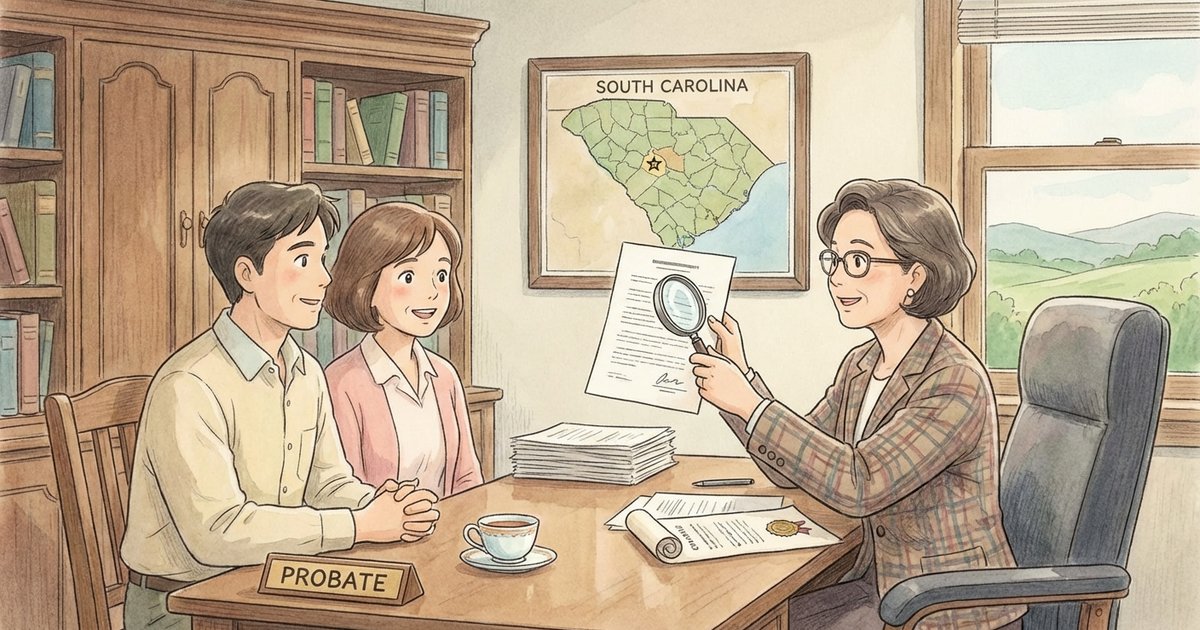
What information do vital records offices need to find a death record when the name is common? – South Carolina
Short Answer
In South Carolina, a common name often is not enough for the state vital records office to locate the correct death record. Vital records staff typically need additional identifiers—most often an approximate date of death (or at least a year range), place of death (county or city), and one or more personal details like date of birth, Social Security number, parents’ names, or a spouse’s name—to narrow the search. If the requester cannot provide enough details, the office may not be able to confirm the correct record or issue a certified copy.
Understanding the Problem
In South Carolina probate matters, a family member or legal representative may need to confirm whether a person died in South Carolina in order to obtain a death certificate. When the decedent’s name is common and only the decedent’s name and spouse’s name are known, the key issue becomes what identifying information the South Carolina vital records office needs to locate the correct death record and avoid mixing multiple people with the same name. The practical trigger is the vital records search itself: without enough identifiers, the office may report too many matches to proceed.
Apply the Law
South Carolina’s vital records are maintained by the state registrar through the South Carolina Department of Public Health (vital records). Death certificates are not fully public records for a long period of time, and access depends on the requester’s relationship or legal interest. Under South Carolina law, copies of death certificates may be issued to family members, legal representatives, and certain other people who can show a direct and tangible interest, while other applicants may be limited to a statement that the death occurred (with the date and county) rather than a certified copy. When fifty years have elapsed after the date of death, death records become public records and any person may obtain copies with an application that includes enough information to locate the record.
Key Requirements
- Sufficient identifying details to locate the record: With a common name, the office usually needs more than the name alone—often a date-of-death range, county/city of death, and at least one additional identifier (date of birth, parents’ names, spouse name, or similar) to narrow matches.
- Eligibility to receive a copy (if the record is not yet public): If fewer than 50 years have passed since the death, the requester generally must qualify as a family member, legal representative, or someone with a direct and tangible interest to receive a copy rather than only a basic statement.
- A complete application and fee for a search/copy: South Carolina law allows the state registrar to charge a fee for issuing a copy and for a search of the files, so the request typically must be submitted in the format the office requires and with the required fee.
What the Statutes Say
- S.C. Code Ann. § 44-63-84 (Death certificates; who may receive copies; 50-year public record rule) – Explains who may obtain copies of South Carolina death certificates, when others may receive only a statement of death, and that death records become public after 50 years if the application includes sufficient information to locate the record.
- S.C. Code Ann. § 44-63-60 (State registrar furnishes certificates) – Authorizes the state registrar to furnish certificates or certified copies from registered vital records to those entitled by law.
Analysis
Apply the Rule to the Facts: Here, the decedent’s name is common and the only additional detail is the spouse’s name, so the vital records office is reporting too many matches. That response usually means the request does not contain enough identifiers to reliably select one record from many people with the same (or similar) name. Adding even one or two narrowing details—an approximate year of death, a likely county of death, an approximate age, or parents’ names—often changes the search from “too many matches” to a manageable set.
Process & Timing
- Who files: A qualifying family member, a legal representative, or another person who can show a direct and tangible interest (depending on the age of the record). Where: South Carolina Department of Public Health, Vital Records (state registrar). What: The agency’s death certificate application/request form and required ID/relationship documentation (requirements can vary by request method). When: As soon as the death certificate is needed for probate or other legal steps; older deaths may still require a search fee and enough identifiers to locate the record.
- Provide narrowing details: If the office reports too many matches, the next step is to supplement the request with additional identifiers. Common “tie-breakers” include an approximate date of death (even a year range), county/city of death, date of birth or approximate age, parents’ names, and any known prior names or alternate spellings.
- Receive the result: If the requester qualifies and the record is located, the office issues a certified copy. If the requester does not qualify (or if the request lacks enough identifiers), the office may deny the certified copy request or may only provide a limited statement that a death occurred (with date and county) when allowed by law.
Exceptions & Pitfalls
- Restricted access (under 50 years): Even if the correct record exists, a requester who does not qualify under South Carolina’s eligibility rules may not receive a certified copy and may be limited to a basic statement (date and county) in some situations. See S.C. Code Ann. § 44-63-84.
- Too-wide search terms: Submitting only a common first and last name (or a name plus spouse name) can produce many matches. Adding a county, a year range, or parents’ names often matters more than adding extra narrative.
- Name variations: Nicknames, middle names/initials, hyphenated surnames, and remarriage can cause missed matches. A good request often lists alternate spellings and known prior names.
- Assuming the death occurred in South Carolina: If the death occurred out of state, South Carolina vital records will not have the record. In probate practice, a parallel step is often to check whether a South Carolina estate was opened, which can help confirm the county and date of death. Related reading: How to Confirm Whether an Estate Is Open and Get Probate Filings in South Carolina.
Conclusion
When a name is common, South Carolina vital records usually needs more than the name to locate the correct death record—most often an approximate date-of-death range, a likely county of death, and at least one additional identifier such as date of birth, parents’ names, or another confirming detail. If fewer than 50 years have passed since the death, access is restricted and the requester must also qualify to receive a copy under South Carolina law. The next step is to submit a supplemented request to South Carolina vital records with a narrowed date range and county.
Talk to a Probate Attorney
If confirming a death in South Carolina is holding up a probate or property matter because the decedent’s name is common, a probate attorney can help identify practical sources for missing identifiers (like county, approximate date, and family details) and help match the correct vital record to the correct person without creating delays.
Disclaimer: This article provides general information about South Carolina law based on the single question stated above. It is not legal advice for your specific situation and does not create an attorney-client relationship. Laws, procedures, and local practice can change and may vary by county. If you have a deadline, act promptly and speak with a licensed South Carolina attorney.

