
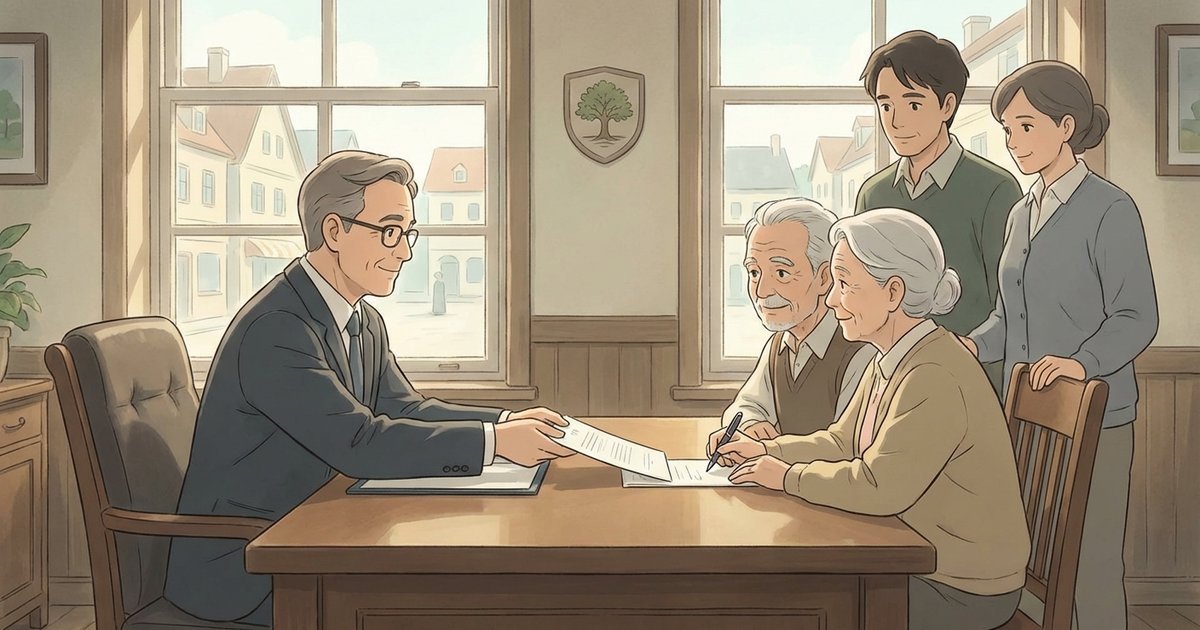
What are the formal requirements for a valid will under North Carolina law? – South Carolina
Short Answer
In South Carolina, a will is generally valid if it is (1) in writing, (2) signed by the person making the will (or signed for them in their presence and at their direction), and (3) signed by at least two witnesses who saw the signing or heard the person acknowledge the signature or the will. A notary is not required to make a will valid, but notarization can help make the will “self-proved,” which usually makes probate smoother. Informal notes and verbal wishes usually do not meet these formal requirements.
Understanding the Problem
Under South Carolina estate planning law, the key question is: what steps must a person take to turn informal notes and verbal wishes into a will that the South Carolina probate court will treat as legally enforceable? The decision point is whether the document was executed with the required formalities—meaning the will was put in writing, properly signed, and properly witnessed—so it can be admitted to probate and used to transfer property at death.
Apply the Law
South Carolina’s Probate Code sets out the baseline execution rules for most wills. In plain terms, the will must be a written document, it must be signed by the person making the will (the “testator”) or by someone else signing for the testator while the testator is present and directing it, and it must be witnessed by at least two people who either watched the signing or received the testator’s acknowledgment. South Carolina does not generally recognize an unwitnessed handwritten will as valid just because it is handwritten and signed; the two-witness formality is still the usual rule. Wills are handled through the South Carolina probate court in the county where venue is proper (often where the person lived at death).
Key Requirements
- Written document: The will must be in writing (not just spoken wishes or a conversation).
- Proper signature: The testator must sign, or another person may sign the testator’s name while the testator is present and directing that signature.
- Two witnesses: At least two people must sign as witnesses, and each witness must have either seen the signing or heard the testator acknowledge the signature or the will.
What the Statutes Say
- S.C. Code Ann. § 62-2-502 (Execution of wills) – Requires a will to be in writing, signed by the testator (or by another at the testator’s direction and in the testator’s presence), and signed by at least two witnesses.
- S.C. Code Ann. § 62-2-503 (Self-proving wills) – Allows a will to be made “self-proved” through a notarized acknowledgment/affidavit process, which can reduce the need for witness testimony later.
- S.C. Code Ann. § 62-2-505 (Choice of law as to execution) – Provides that a will may still be valid if it complied with certain other jurisdictions’ execution rules in specific circumstances.
Analysis
Apply the Rule to the Facts: The facts describe informal notes and verbal wishes, but no formal execution. Under South Carolina’s execution rules, verbal wishes are not enough, and notes are not enough unless they are turned into a written will that is properly signed and witnessed by two people. The practical fix is usually to convert the notes into a final written document and then complete a proper signing ceremony with two witnesses (and often a self-proving affidavit).
Process & Timing
- Who signs: The testator signs (or directs another to sign in the testator’s presence). Where: Typically done in a private setting (not in court). What: A written will plus an attestation clause; many wills also include a self-proving affidavit completed before a notary. When: Before death, while the testator has capacity and can act voluntarily.
- Witnessing step: Two witnesses sign after witnessing the signing or the testator’s acknowledgment. Although South Carolina law does not require the witnesses to sign in each other’s presence, many signing ceremonies still have everyone present at the same time to reduce later disputes.
- After death (probate): The original will is filed with the South Carolina probate court to start probate. If the will is self-proved, it is usually easier to establish proper execution without tracking down witnesses; if it is not self-proved, at least one witness may need to provide testimony or an affidavit in some contested or formal settings.
Exceptions & Pitfalls
- Interested witnesses: Using a witness who also receives a gift under the will can create avoidable problems. South Carolina law can limit or void certain gifts to an interested witness (or certain related persons) unless there are enough disinterested witnesses, so it is safer to use neutral witnesses.
- “Notarized” is not the same as “valid”: Notarizing a document does not automatically make it a valid will if the two-witness requirement was not met. Notarization is mainly used to make a will self-proved.
- Missing originals and weak paperwork: A will that lacks an attestation clause, has unclear signatures, or cannot be located after death can trigger extra proof requirements and disputes. Proper execution and safekeeping reduce those risks.
Related reading: Do South Carolina wills need a notary if there are two witnesses? and Can a beneficiary or family member witness a will in South Carolina?.
Conclusion
In South Carolina, a will is generally valid only if it is in writing, signed by the testator (or by someone else in the testator’s presence and at the testator’s direction), and signed by at least two witnesses who observed the signing or the testator’s acknowledgment. A notary is not required for validity, but a self-proving affidavit can make probate easier. Next step: sign a final written will with two qualified witnesses (and, if possible, complete the self-proving affidavit at the same time).
Talk to a Estate Planning Attorney
If a person has informal will notes or verbal wishes but needs a will that will hold up in South Carolina probate court, our firm has experienced attorneys who can help explain the signing requirements, witness selection, and timing so the document is enforceable and easier to probate.
Disclaimer: This article provides general information about South Carolina law based on the single question stated above. It is not legal advice for your specific situation and does not create an attorney-client relationship. Laws, procedures, and local practice can change and may vary by county. If you have a deadline, act promptly and speak with a licensed South Carolina attorney.

