
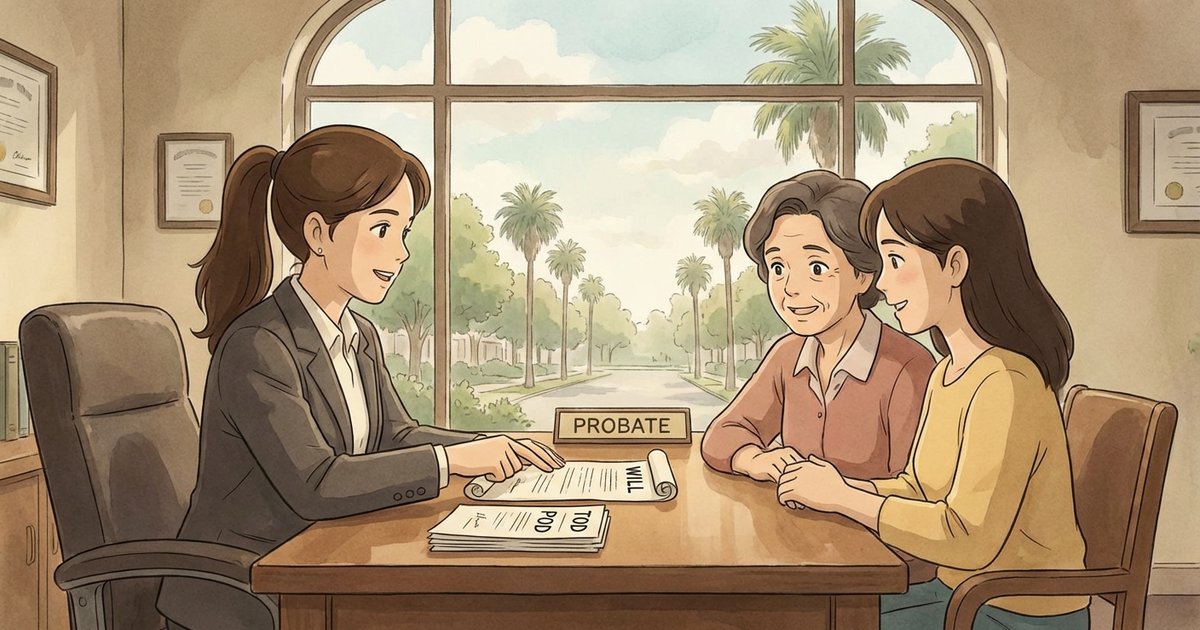
Do I still need a transfer-on-death deed or a payable-on-death designation if my will already leaves all my property to my daughter? – South Carolina
Short Answer
Often, yes—at least for certain assets. In South Carolina, a will generally controls “probate” property, but many assets can pass outside probate by beneficiary designation (like POD/TOD), and those designations usually control even if the will says something different. POD/TOD planning can reduce the amount that must go through probate, but it also creates coordination issues (like beneficiary predeceasing, minor beneficiaries, and having enough probate assets to pay expenses).
Understanding the Problem
In South Carolina probate planning, the decision point is whether a will alone is enough to transfer property to a daughter at death, or whether certain assets should also use a payable-on-death (POD) or transfer-on-death (TOD) beneficiary designation. The question focuses on how property transfers at death when a will leaves everything to one person, and whether adding POD/TOD designations changes the result, timing, or court involvement.
Apply the Law
Under South Carolina law, a will is generally interpreted to pass all property owned at death (including after-acquired property). But a will mainly controls probate property—assets titled in the decedent’s name alone with no beneficiary mechanism. By contrast, many POD/TOD transfers are effective by statute or contract and are treated as non-probate transfers, meaning they pass directly to the named beneficiary at death and are not controlled by the will’s distribution terms. The forum for a will-based transfer is the South Carolina Probate Court in the county where the decedent lived.
Key Requirements
- Identify what is probate vs. non-probate: A will controls probate assets; beneficiary designations and survivorship titling often control non-probate assets.
- Use the correct transfer tool for the asset type: POD is commonly used for deposit accounts; TOD is commonly used for securities and (starting July 1, 2025) certain titled personal property like vehicles and watercraft through the appropriate state agency process.
- Coordinate the plan for contingencies and administration: The plan should address what happens if the beneficiary dies first, whether a minor or incapacitated beneficiary could receive assets outright, and whether the probate estate will have enough funds to pay expenses and debts.
What the Statutes Say
- S.C. Code Ann. § 62-2-602 (Will passes all property owned at death) – A will is construed to pass all property owned at death, including property acquired after signing the will.
- S.C. Code Ann. § 35-6-50 (TOD/POD wording for securities registration) – “TOD” or “POD” language can create a beneficiary-form registration for securities.
- S.C. Code Ann. § 35-6-60 (No ownership until death; change allowed) – A TOD beneficiary has no ownership until death, and the owner can change or cancel the designation during life.
- S.C. Code Ann. § 35-6-90 (TOD effective by contract; not testamentary) – A TOD transfer for securities is effective by contract and statute and is not treated as a will transfer.
- S.C. Code Ann. § 62-6-401 (Transfer on death for certain titled personal property) – Allows TOD designations for certain titled personal property through DMV/DNR processes; effective July 1, 2025.
Analysis
Apply the Rule to the Facts: The will leaving all property to a daughter generally covers probate assets. However, if any accounts or titled assets have POD/TOD beneficiaries, those assets typically transfer directly to the named beneficiary at death and may not follow the will’s instructions. If the daughter is already the intended recipient of everything, POD/TOD may still be useful to reduce probate administration for certain assets, but the designations must be coordinated so they do not create gaps (for example, if the daughter dies first) or administrative problems (for example, not enough probate funds to pay expenses).
Process & Timing
- Who files: For will-based transfers, the nominated personal representative (executor) or another interested person. Where: South Carolina Probate Court in the county where the decedent lived. What: The original will and the probate opening documents required by that county. When: As soon as practical after death, especially if bills, asset access, or deadlines are pending.
- For POD/TOD assets: The beneficiary typically works directly with the bank/brokerage or the relevant state agency to claim and retitle the asset by providing proof of death and completing the institution’s forms. Timing depends on the institution’s processing and whether documentation is complete.
- Wrap-up: Probate assets transfer through the estate administration process and end with distribution to the daughter under the will; non-probate assets transfer by beneficiary claim and retitling outside the probate distribution process.
Exceptions & Pitfalls
- Beneficiary designations can override the will: If a POD/TOD beneficiary is someone other than the daughter (or a joint owner has survivorship rights), the will may not control that asset’s transfer.
- Beneficiary dies first or no backup is named: Many non-probate transfers fall back to the estate if no beneficiary survives, which can force probate anyway and may defeat the intended “simple transfer” goal if contingencies are not planned.
- Minor or incapacitated beneficiary issues: Non-probate transfers often pay outright to the named person. If that person cannot legally manage the funds, a conservatorship or court-supervised arrangement may be required.
- Probate cash-flow problems: If most assets pass by POD/TOD, the probate estate may have too little money to pay expenses and debts, creating pressure to seek contributions or sell assets.
- Form-driven mistakes: POD/TOD and joint ownership are often set up on standard forms. Small errors (wrong beneficiary name, missing contingent beneficiary, inconsistent ownership type) can cause delays or unintended results.
Conclusion
In South Carolina, a will leaving everything to a daughter generally transfers probate property, but POD/TOD designations can still matter because they usually transfer certain assets outside probate and may control over the will for those assets. POD/TOD can reduce probate administration, but it must be coordinated to handle beneficiary-death contingencies and to ensure the probate estate can still pay expenses. A practical next step is to inventory each asset and confirm its title/beneficiary setup, then update POD/TOD forms to match the will’s plan.
Talk to a Probate Attorney
If a will leaves everything to a daughter but accounts, securities, or titled property may have POD/TOD designations, a probate attorney can help align beneficiary forms with the will, build in contingencies, and reduce delays and court involvement where appropriate.
Disclaimer: This article provides general information about South Carolina law based on the single question stated above. It is not legal advice for your specific situation and does not create an attorney-client relationship. Laws, procedures, and local practice can change and may vary by county. If you have a deadline, act promptly and speak with a licensed South Carolina attorney.
xq

