
How can I transfer a property deed from my spouse’s name into my name or joint names?: North Carolina – South Carolina
Short Answer
In South Carolina, a deed usually changes ownership only if the current owner signs a new deed that transfers the property to the new owner(s), and that deed is recorded in the county where the property is located. If the goal is to add a spouse as a co-owner, the deed must clearly state the type of co-ownership—most commonly “joint tenants with rights of survivorship.” Because deed changes can affect mortgage terms and future rights on divorce or death, the safest approach is to confirm the current title, choose the intended ownership form, then record a properly prepared deed with the Register of Deeds.
Understanding the Problem
How can a spouse transfer South Carolina real estate that is currently titled in one spouse’s name into the other spouse’s name alone, or into both spouses’ names together? The decision point is whether the transfer is meant to create shared ownership (and, if so, whether it should include a survivorship feature) or to move the entire ownership from one spouse to the other. The key trigger is that the person currently shown as owner on the deed must sign a new deed that matches the intended ownership and is then recorded in the county land records.
Apply the Law
South Carolina treats a deed as the main tool for transferring real estate title. The current owner (the “grantor”) signs a deed that names the new owner(s) (the “grantee(s)”) and describes the property. Recording the deed with the county Register of Deeds puts the public on notice of the change. If the goal is joint ownership with survivorship, South Carolina law recognizes a joint tenancy with right of survivorship when the deed uses clear survivorship language.
Key Requirements
- A deed signed by the current owner: The spouse whose name is on title must sign a deed that transfers the property to the intended owner(s). If the deed is meant to add the other spouse, the current owner still signs as grantor.
- Clear statement of the intended co-ownership (if adding a spouse): If the intent is “joint tenancy with right of survivorship,” the deed should use clear survivorship wording so the survivorship feature is created under South Carolina law, rather than defaulting to a different form of co-ownership.
- Recording in the correct county office: The signed deed should be recorded in the county where the property is located with the Register of Deeds (or, in counties without that office, with the Clerk of Court) so the title records reflect the change.
What the Statutes Say
- S.C. Code Ann. § 27-7-40 (Joint tenancy; right of survivorship language; severance) – Explains how a deed can create joint tenancy with right of survivorship and how that ownership can be severed (including upon divorce, unless a court order provides otherwise).
- S.C. Code Ann. § 20-5-20 (Married person’s power to convey separate property) – Confirms that a married person can convey separate property by deed as if unmarried.
Analysis
Apply the Rule to the Facts: The situation involves moving title from one spouse’s name to the other spouse’s name alone or to both spouses together. Under South Carolina practice, that typically means the spouse currently on the deed signs a new deed naming the intended grantee(s). If the intent is joint ownership with survivorship, the deed should include survivorship wording that matches South Carolina’s joint tenancy statute so the survivorship feature is clear in the public record.
Process & Timing
- Who files: Typically the spouse receiving the property (or the spouses together), after the current owner signs the deed. Where: The Register of Deeds in the South Carolina county where the property is located (or the Clerk of Court if there is no Register of Deeds). What: A properly prepared deed (often a quitclaim deed or warranty deed, depending on the goal) with the correct legal description and the intended vesting language (for example, joint tenancy with right of survivorship if that is the goal). When: As soon as practical after signing, because recording is what updates the public title record.
- Title check and lender review: Before recording, it is common to confirm how title is currently held and whether there is a mortgage. Some mortgages restrict transfers or require lender consent, even between spouses, so the loan documents should be reviewed before changing title.
- Record and obtain proof: After recording, the office returns a recorded copy (or provides an online image). That recorded deed becomes the main proof of the updated ownership in the county land records.
Exceptions & Pitfalls
- Mortgage and due-on-sale clauses: A deed transfer can violate loan terms if done without lender approval. Even if the spouses agree, the lender’s documents may still control what is allowed.
- Wrong survivorship language: If the goal is survivorship, the deed should use clear “as joint tenants with rights of survivorship, and not as tenants in common” wording. If the deed is unclear, it can create disputes later about what ownership was intended.
- Divorce effects on survivorship: South Carolina law provides that a joint tenancy between spouses (with no other joint tenants) is generally severed upon filing an order or decree dissolving the marriage, unless a court order provides otherwise. That can change what happens to the property after divorce.
- Incorrect legal description or missing signatures: Using the wrong legal description, failing to sign correctly, or recording in the wrong county can create a cloud on title and require corrective deeds.
- Confusing “title” with “responsibility for the loan”: Adding a spouse to the deed does not automatically add that spouse to the mortgage, and removing a spouse from the deed does not automatically remove that spouse from mortgage liability.
Conclusion
In South Carolina, transferring a home from one spouse’s name to the other spouse’s name (or into both spouses’ names) is usually done by having the current titled spouse sign a new deed and recording it with the Register of Deeds in the county where the property sits. If the goal is joint ownership with survivorship, the deed should clearly state “as joint tenants with rights of survivorship, and not as tenants in common.” Next step: prepare and record the deed with the correct vesting language as soon as practical after signing.
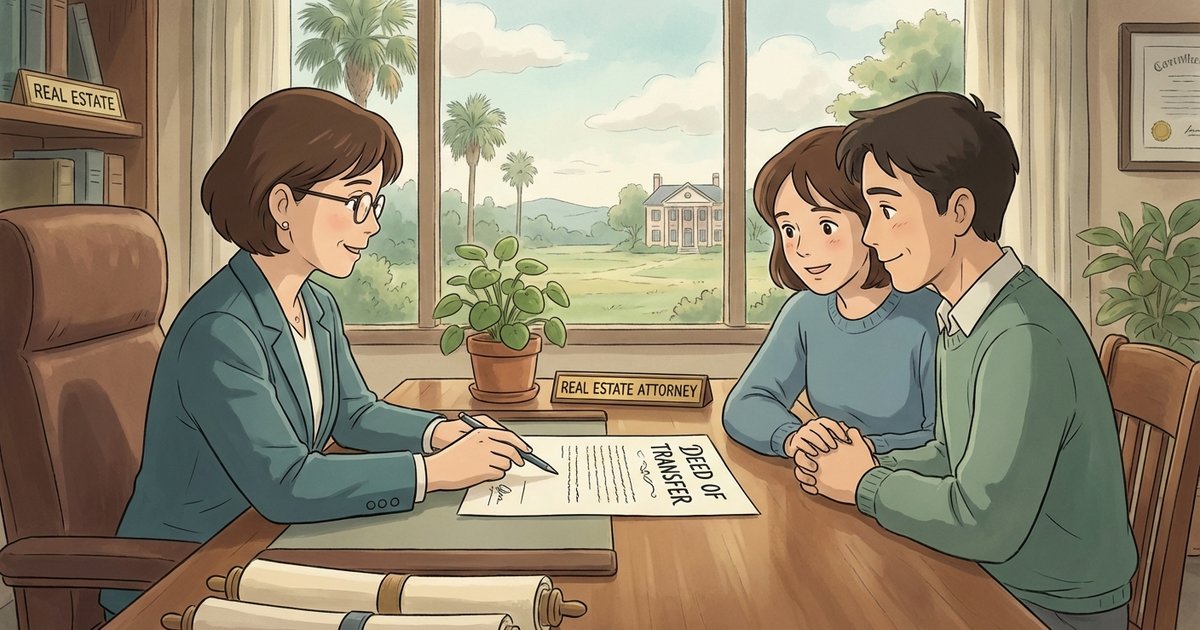
Talk to a Real Estate Attorney
If a deed needs to be transferred from one spouse to the other or into joint names, a real estate attorney can review the current deed, confirm the intended ownership (including survivorship), and help prepare and record the correct documents while flagging mortgage and divorce-related risks.
Disclaimer: This article provides general information about South Carolina law based on the single question stated above. It is not legal advice for your specific situation and does not create an attorney-client relationship. Laws, procedures, and local practice can change and may vary by county. If you have a deadline, act promptly and speak with a licensed South Carolina attorney.
xq

