
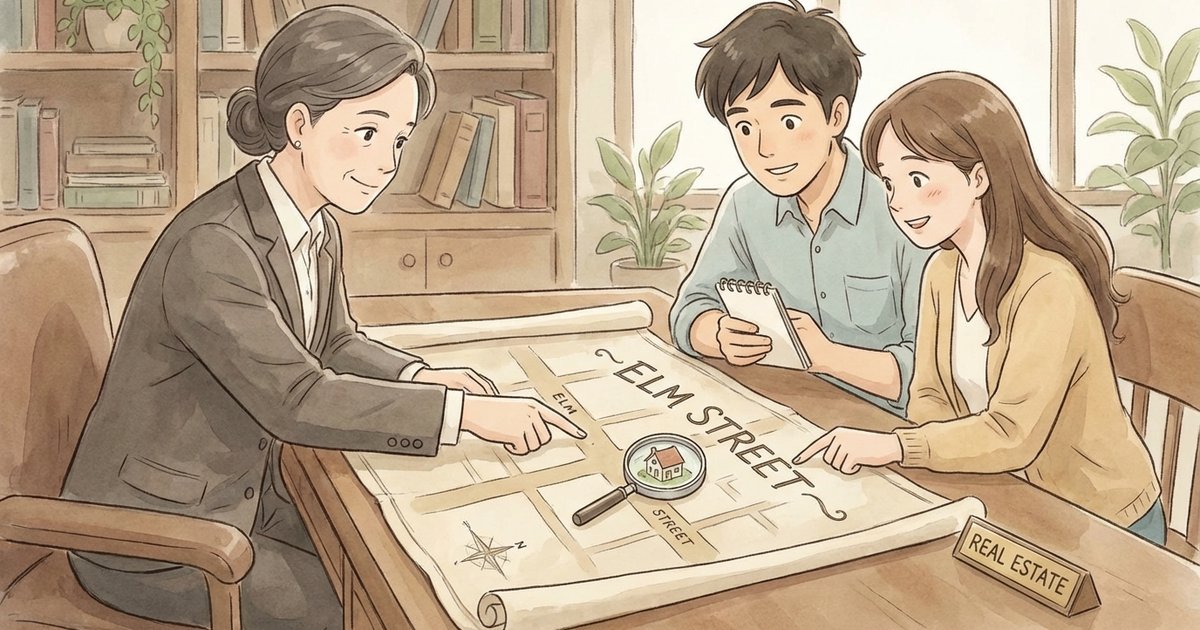
How can I find a property’s deed if I only know the street name but not the exact address or parcel number? – South Carolina
Short Answer
In South Carolina, a deed is usually found through the county Register of Deeds or Clerk of Court records for the county where the land sits. If only the street name is known, the usual path is to narrow the property first through county tax maps, GIS mapping, subdivision plats, or nearby owner records, then use that information to search the deed index and recorded plats. A street name alone often is not enough to pull the deed directly because deed records are commonly indexed by party names, book and page, or legal description rather than by street name only.
Understanding the Problem
The question is whether a person in South Carolina can locate a deed for a specific parcel when the only starting point is the street name. The main issue is identifying the correct parcel first, then matching that parcel to the county land records office that keeps the deed and any recorded plat. This is a single property-identification problem, not a boundary dispute or title lawsuit. The answer turns on which county office holds the records and whether enough details can be gathered from mapping and index records to isolate the parcel.
Apply the Law
Under South Carolina law, real property records are kept and indexed at the county level. In many counties, the Register of Deeds keeps deed records, while in other counties the Clerk of Court performs that function. The practical rule is simple: first identify the county and the likely parcel, then search the county’s deed index, recorded plats, and related land records. A recorded plat can help connect a street location to a lot number, dimensions, and a deed reference, and the deed’s legal description often controls over a mailing address when boundaries matter.
Key Requirements
- Correct county office: The search must start in the county where the property is located, because South Carolina land records are maintained county by county.
- Enough identifying details: A street name by itself may be too broad, so the search often needs a subdivision name, nearby cross street, owner name, tax map number, or lot reference to narrow the parcel.
- Recorded legal description: The deed and any recorded plat should be reviewed together because the legal description, lot reference, and plat book citation help pinpoint the boundaries.
What the Statutes Say
- S.C. Code Ann. § 30-5-10 (Register of Deeds duties; Clerk of Court in certain counties) – explains that deed-recording duties are handled by the Register of Deeds in some counties and by the Clerk of Court in others.
- S.C. Code Ann. § 30-9-20 (Separate indexes) – requires county land-record offices to maintain indexes for the records they keep.
- S.C. Code Ann. § 30-5-230 (Recordation of plats) – allows plats of real property to be recorded and indexed in the county land records office.
Analysis
Apply the Rule to the Facts: Here, the known fact is only the street name in South Carolina, while the exact address, parcel number, and deed details are unknown. That usually means the first step is not a deed search by deed book and page, but a parcel-identification search through county GIS maps, tax records, subdivision plats, or neighboring parcels on the same street. Once the likely parcel is identified, the county deed index can be searched for the current owner and prior conveyances, and the recorded plat can be compared to the deed’s legal description to help locate the boundaries.
If the street contains only a few lots in a recorded subdivision, a plat may quickly show lot numbers and dimensions that lead to the deed. If the street is rural, long, or has multiple unnumbered tracts, the search may require moving from tax map layers to adjoining-owner deeds and then back to the target parcel’s chain of title. For more detail on how ownership records fit into this process, see how to find the legal owner of a property and what the title shows in South Carolina.
Process & Timing
- Who files: No filing is usually required to start the search. Where: the county Register of Deeds or, in counties covered by statute, the Clerk of Court, along with the county tax assessor or GIS mapping office in the South Carolina county where the property sits. What: search the county’s deed index, recorded plat index, tax map records, and GIS parcel viewer for the street name, nearby intersections, subdivision name, or neighboring owner names. When: as soon as the county is known; there is no single statewide deadline for a private deed search.
- Next, use the narrowed parcel information to pull the most recent deed, then review the legal description, lot number, plat book and page, and any cross-referenced prior deeds. County systems vary, and some counties allow online searching while others require an in-person or staff-assisted search.
- Finally, compare the deed to any recorded plat. If the goal is to confirm exact boundaries on the ground, the last step is often a title search and, if needed, a survey. For related guidance, see whether a recorded plat can confirm a lot’s exact location and whether a survey helps prove what part of the property was conveyed.
Exceptions & Pitfalls
- A street name may not match the legal description in the deed. Older deeds often identify land by metes and bounds, lot number, subdivision plat, or adjoining owners instead of a modern street address.
- County records may list the property under a different owner name, a prior owner, or a court-related conveyance, so searching only one name or one spelling can miss the deed.
- Recorded plats help, but they do not always answer every boundary question. If the deed description and plat do not line up cleanly, or if the parcel is part of a larger tract, a fuller title search or survey may be needed.
Conclusion
In South Carolina, finding a deed with only a street name usually requires a two-step process: identify the parcel first, then search the county deed and plat records. The key threshold is whether the street name can be narrowed to one specific lot or tract through county GIS, tax maps, or subdivision records. The next step is to search the Register of Deeds or Clerk of Court records in the county where the property is located and pull the deed and any recorded plat tied to that parcel.
Talk to a Real Estate Attorney
If a property search starts with only a street name and the goal is to locate the deed and confirm the boundaries, our firm can help identify the right county records, review the deed and plat, and explain the next steps and timing.
Disclaimer: This article provides general information about South Carolina law based on the single question stated above. It is not legal advice for your specific situation and does not create an attorney-client relationship. Laws, procedures, and local practice can change and may vary by county. If you have a deadline, act promptly and speak with a licensed South Carolina attorney.

