
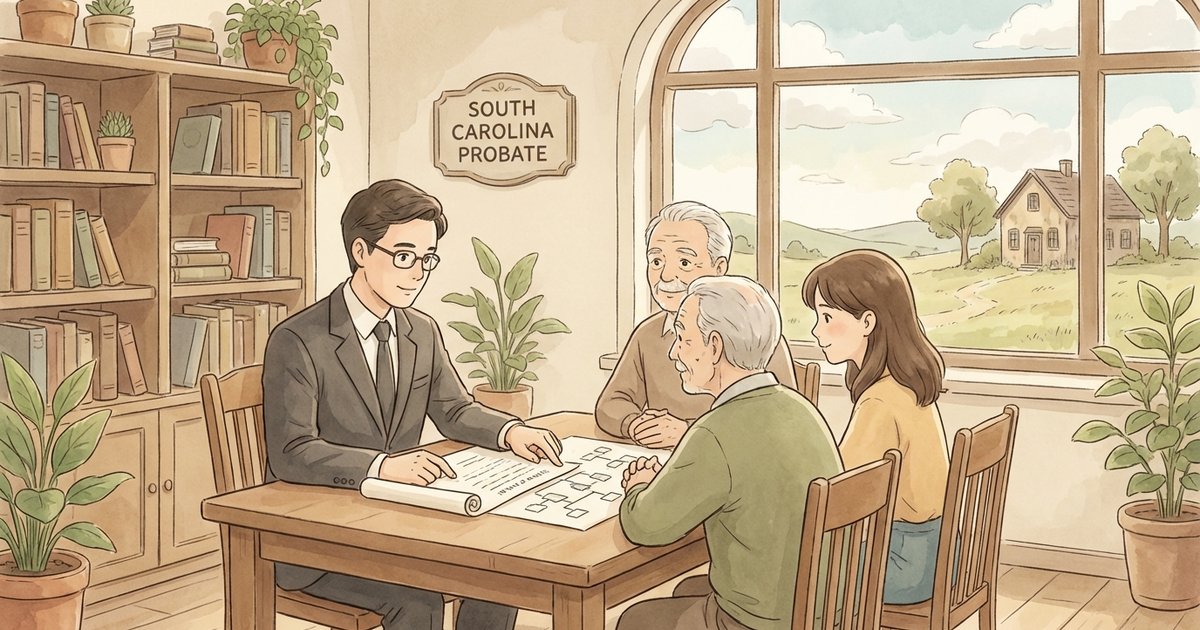
How do I find out who the rightful heirs are and who owns the property after my grandparent died? – South Carolina
Short Answer
In South Carolina, the “rightful heirs” depend on whether a valid will controls the estate. If there is no will (or the will does not cover everything), South Carolina’s intestate succession laws decide who inherits. For real estate, ownership generally passes at death to the people named in a will (devisees) or, if there is no will, to the legal heirs—but that ownership remains subject to probate administration and creditor claims until the estate is properly handled.
Understanding the Problem
In South Carolina probate, the key question is: after a grandparent dies, who counts as the legal heirs (or will beneficiaries) and who legally owns the house or land now? The answer usually turns on whether there is a will, what property is part of the probate estate, and whether a Probate Court case is opened to appoint a personal representative to administer and distribute the estate.
Apply the Law
South Carolina separates (1) who is entitled to inherit and (2) how title to property is shown in the public record. If there is a valid will, the will controls who receives probate assets. If there is no will, South Carolina’s intestate succession statutes control who the heirs are and what shares they receive. Even when real estate “devolves” to heirs or devisees at death, the personal representative can still need authority to manage the property, pay valid debts, and complete distribution documents.
Key Requirements
- Identify whether there is a will: A will (if valid and admitted to probate) generally controls who inherits probate property. If there is no will, intestate succession applies.
- Confirm what property is actually part of the probate estate: Some assets pass outside probate (for example, certain beneficiary-designated accounts). Probate focuses on property titled in the decedent’s name alone or payable to the estate.
- Use Probate Court records (and, for real estate, recorded deeds) to confirm ownership: Probate filings can show who was appointed as personal representative and who the court recognizes as heirs/devisees. For real property, a deed of distribution (or other recorded instrument) is often used to show the post-death ownership chain in land records.
What the Statutes Say
- S.C. Code Ann. § 62-2-101 (Intestate estate) – Any part of an estate not effectively disposed of by will passes to heirs under South Carolina intestacy rules.
- S.C. Code Ann. § 62-2-102 (Share of the spouse) – Sets the surviving spouse’s share when there is no will.
- S.C. Code Ann. § 62-2-103 (Share of heirs other than surviving spouse) – Sets the order of inheritance for children/descendants, parents, siblings (issue of parents), and more remote relatives.
- S.C. Code Ann. § 62-3-101 (Devolution of estate at death; restrictions) – Explains how real property and personal property pass at death, and that these rights remain subject to administration and creditor claims.
- S.C. Code Ann. § 62-3-709 (Duty of personal representative; possession of estate) – Gives the personal representative authority to take control of estate property when needed for administration.
- S.C. Code Ann. § 62-3-907 (Deed of distribution; evidence) – Provides for a deed of distribution for real property as evidence of the distributee’s title.
- S.C. Code Ann. § 62-3-901 (Successors’ rights if no administration) – Addresses heirs/devisees’ rights when no probate administration is opened and how title may be established by proof.
Analysis
Apply the Rule to the Facts: When a grandparent dies, the first step is determining whether a will exists and whether it was filed with the South Carolina Probate Court. If a will controls, the people named in the will are the beneficiaries for probate property. If there is no will, the “rightful heirs” are determined by South Carolina’s intestate succession order (spouse first, then descendants, then parents, then siblings and more remote relatives), and the real estate generally passes to those heirs subject to the estate administration process.
Process & Timing
- Who files: Usually a family member or other interested person. Where: The Probate Court in the South Carolina county where the grandparent lived at death (domicile). What: An application/petition to open the estate and appoint a personal representative, plus the original will (if any) and a certified death certificate. When: As soon as practical after death, especially if real estate needs to be sold, insured, or maintained, or if deadlines for creditor issues are approaching.
- Heir/beneficiary identification: The Probate Court file typically includes information identifying heirs (if intestate) or beneficiaries (if testate). If family relationships are unclear, additional proof may be needed (for example, vital records or sworn statements) to confirm the correct heirs under the statute.
- Confirming who owns the real estate: For South Carolina real property, the public land records (Register of Deeds or Clerk of Court land records, depending on the county) show the last recorded deed in the grandparent’s name. After probate administration, the personal representative can execute a deed of distribution to document the transfer to the heirs/beneficiaries in the land records.
Exceptions & Pitfalls
- Non-probate transfers can change “who owns what”: Some assets pass by contract or title (for example, certain joint ownership or beneficiary designations). Those assets may not follow the will or intestacy rules.
- Real estate can be “inherited” but still hard to prove without paperwork: Families often assume ownership changed automatically, but buyers, lenders, and title companies usually require probate documents and/or recorded deeds to confirm marketable title.
- Creditor and administration issues: Even if heirs are clear, the estate may need administration to pay valid debts and expenses. Distributing property too early can create disputes or require “undoing” an improper distribution.
For readers who want more background on how South Carolina intestate succession works, these articles may help: What happens to real property in South Carolina when someone dies without a will? and Who are the heirs in South Carolina when someone dies without a will?.
Conclusion
In South Carolina, the “rightful heirs” are determined by a valid will (if one exists) or by the state’s intestate succession statutes if there is no will. Real property generally passes at death to the devisees or heirs, but it remains subject to probate administration and creditor claims, and clear title often requires probate filings and a recorded distribution document. The next step is to open the estate in the Probate Court for the county where the grandparent lived and request appointment of a personal representative.
Talk to a Probate Attorney
If a grandparent died and the family needs to confirm who the heirs are and who owns the home or land, a probate attorney can help review the will (if any), identify the correct heirs under South Carolina law, and map out the Probate Court steps needed to clear title and complete a proper distribution.
Disclaimer: This article provides general information about South Carolina law based on the single question stated above. It is not legal advice for your specific situation and does not create an attorney-client relationship. Laws, procedures, and local practice can change and may vary by county. If you have a deadline, act promptly and speak with a licensed South Carolina attorney.

