
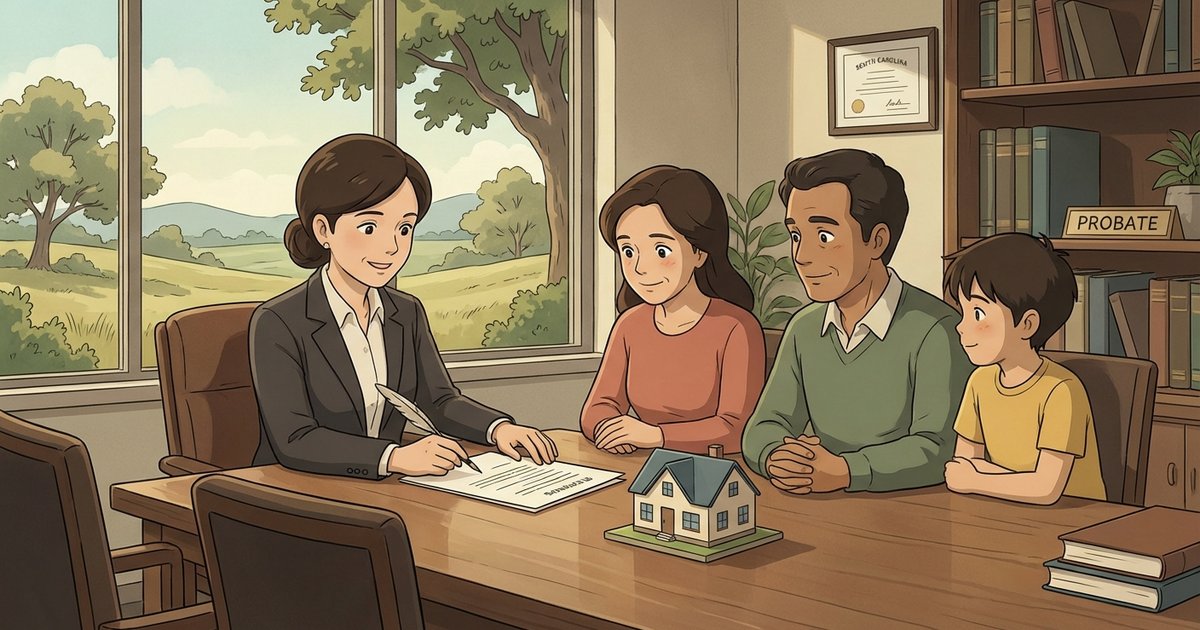
How does title transfer for an inherited home when there is no will and multiple heirs? – South Carolina
Short Answer
In South Carolina, when someone dies without a will, the home typically becomes part of the probate estate and is transferred under the state’s intestate succession rules. With multiple heirs, the end result is often that the heirs own the property together (commonly as tenants in common) unless the estate is administered and the title is formally updated through probate filings and recorded documents. In most cases, a personal representative must be appointed through the Probate Court to sign and record the paperwork that clears and updates title.
Understanding the Problem
In South Carolina, when a homeowner dies without a will, how does legal title to the home move from the deceased owner’s name into the names of multiple heirs? Does the Probate Court need to appoint a personal representative, and what documents must be filed and recorded so the public land records show the correct owners? The key issue is how intestate succession and probate administration work together to create a “marketable” title that a lender, buyer, or title company will accept.
Apply the Law
South Carolina’s Probate Court oversees estate administration when a person dies owning property in their name alone. If there is no will, South Carolina’s intestate succession rules determine who the heirs are and what shares they receive. Even when heirs inherit by operation of law, the land records usually still show the deceased owner until the estate is opened and the proper probate and recording steps are completed. When multiple heirs inherit, they commonly end up as co-owners, and later disagreements can lead to a partition case in the Court of Common Pleas.
Key Requirements
- Probate must be opened (in most cases): A Probate Court proceeding is usually needed to appoint a personal representative and give someone legal authority to handle the estate’s real estate paperwork.
- Heirs and shares must be determined: The estate must identify the correct heirs under South Carolina intestacy rules and confirm each person’s share before title can be updated.
- Title must be updated in the county land records: A recorded document (often signed by the personal representative) is typically needed so the Register of Deeds’ records reflect the new ownership.
What the Statutes Say
- S.C. Code Ann. § 15-61-10 (Partition of real property; heirs’ property determination) – Allows co-owners to compel partition and requires a court to determine whether property is “heirs’ property” in a partition case.
- S.C. Code Ann. § 15-61-320 (Definitions; “heirs’ property”) – Defines “heirs’ property” and the conditions that commonly apply when multiple relatives inherit and hold title together.
- S.C. Code Ann. § 15-61-330 (Preliminary determination of heirs’ property) – Requires a preliminary court determination in a partition case about whether the property qualifies as heirs’ property.
- S.C. Code Ann. § 15-61-400 (Sale of heirs’ property) – Sets rules for how a court-ordered sale may be handled if partition by sale is ordered for heirs’ property.
- S.C. Code Ann. § 27-7-40 (Joint tenancy with right of survivorship; filing death certificate) – Explains that survivorship property can pass outside probate and allows recording a certified death certificate to update the record for joint tenancy survivorship situations.
Analysis
Apply the Rule to the Facts: The question assumes (1) no will, (2) a home is being inherited, and (3) there are multiple heirs. Under South Carolina practice, the main path to transfer title is to open a probate estate in the Probate Court, appoint a personal representative, confirm the heirs under intestacy rules, and then record the appropriate probate-backed document(s) in the county where the home is located so the land records reflect the heirs’ ownership. If the heirs end up owning together and later disagree about use or sale, South Carolina law provides a partition process, including special rules when the property qualifies as “heirs’ property.”
Process & Timing
- Who files: A family member/heir or another qualified person. Where: South Carolina Probate Court in the county where the decedent lived (and sometimes additional filings in the county where the real estate sits). What: A petition/application to open the estate and appoint a personal representative (the Probate Court provides forms in many counties). When: As soon as practical after death, especially if the home needs to be sold, refinanced, insured, or repaired using estate funds.
- Administration step: The personal representative gathers information, identifies heirs, addresses creditor issues, and confirms what the estate owns. If the home was owned solely in the decedent’s name, the personal representative typically handles the paperwork needed to move title into the heirs’ names or to sell the home and distribute proceeds.
- Recording step: After the Probate Court process supports the transfer, the appropriate document is recorded with the Register of Deeds in the county where the home is located so the public record shows the new owners. Title companies often require this recorded chain of authority before closing a sale.
Exceptions & Pitfalls
- Survivorship deeds can change everything: If the deed was held as a joint tenancy with right of survivorship, the home may pass outside probate to the surviving owner(s), and recording a certified death certificate may be part of updating the record. See S.C. Code Ann. § 27-7-40.
- “Heirs’ property” risks with multiple heirs: When many relatives inherit and hold title together, the property can become “heirs’ property,” which can make later sales, financing, and decision-making difficult and can lead to partition litigation. South Carolina has specific rules for heirs’ property partitions. See S.C. Code Ann. § 15-61-320.
- Skipping probate can leave a cloud on title: Families sometimes assume “everyone knows who the heirs are,” but buyers and lenders usually require recorded proof. Without probate-backed documentation, the home can be hard to sell or refinance.
- Missing heirs or family disputes: If an heir cannot be located or heirs disagree, the estate may stall, and a later partition case may be filed in the Court of Common Pleas under S.C. Code Ann. § 15-61-10.
Related reading: What happens to real property in South Carolina when someone dies without a will? and What documents prove ownership of an inherited property interest in South Carolina?.
Conclusion
In South Carolina, when there is no will and multiple heirs, the inherited home usually must be handled through Probate Court administration so a personal representative can confirm the heirs and complete the paperwork needed to update the county land records. Multiple heirs commonly end up as co-owners, which can create “heirs’ property” issues if decisions are not coordinated. The most important next step is to open the estate in the appropriate South Carolina Probate Court and seek appointment of a personal representative so title can be properly transferred and recorded.
Talk to a Probate Attorney
If a family is dealing with an inherited home in South Carolina with no will and multiple heirs, a probate attorney can help identify the correct heirs, get the right person appointed by the Probate Court, and map out the steps needed to clear and transfer title so the property can be kept, sold, or divided without avoidable delays.
Disclaimer: This article provides general information about South Carolina law based on the single question stated above. It is not legal advice for your specific situation and does not create an attorney-client relationship. Laws, procedures, and local practice can change and may vary by county. If you have a deadline, act promptly and speak with a licensed South Carolina attorney.

