
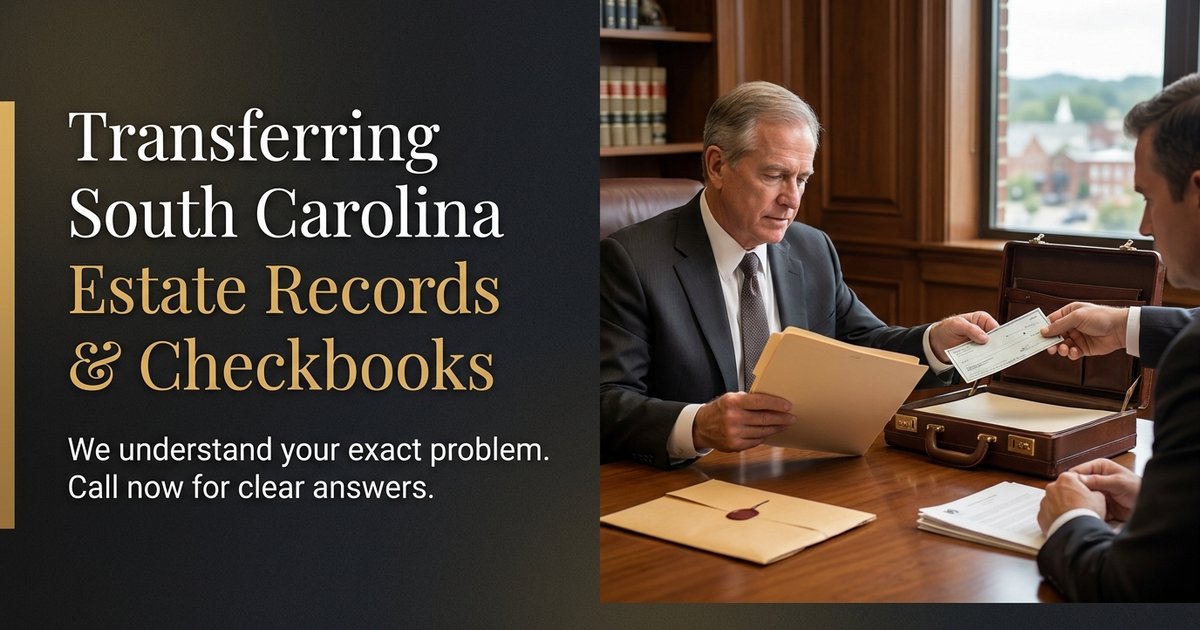
What should I do if I have estate records but am no longer handling the estate? – South Carolina
Short Answer
Preserve the complete estate file and checkbook, verify who currently has court authority to administer the South Carolina estate, and promptly transfer the materials to that person or the person’s authorized law firm. Do not write checks or otherwise conduct new estate transactions unless authorized to protect or transfer the estate, and do not destroy records or rely only on an informal claim of authority. A former personal representative remains responsible for preserving, accounting for, and delivering estate assets under that person’s control.
Understanding the Problem
In South Carolina, what must a former personal representative or other custodian do when that person still holds an estate file and estate account checkbook after no longer handling the administration? The central issue is whether the materials should be delivered to a qualified successor personal representative, an authorized law firm, or another recipient identified by the Probate Court.
Apply the Law
South Carolina calls the court-appointed person who administers an estate the personal representative. A person named in a will does not receive full authority merely from being nominated; the Probate Court must appoint that person, who must qualify and be issued letters. When a personal representative’s appointment ends, the person ordinarily loses authority to act for the estate but must still protect, account for, and deliver estate assets under that person’s control.
A qualified successor personal representative generally receives the powers and duties needed to continue the administration. The successor therefore needs the financial records, correspondence, filed documents, checkbook, statements, receipts, creditor information, and other materials required to understand prior transactions and complete the estate.
Key Requirements
- Preserve the materials: Keep the paper and electronic file intact. Secure the checkbook, bank statements, receipts, passwords, and original documents. Do not alter records or conduct new estate transactions without authority.
- Verify the recipient’s authority: Confirm the identity of the currently appointed personal representative through current Letters of Appointment, a Probate Court order, or the court’s file. If a law firm requests the materials, obtain written confirmation that it represents the current personal representative or has authority under a court order.
- Provide a complete accounting and transfer: Organize the records so the successor can identify estate assets, deposits, payments, outstanding checks, claims, and unfinished tasks. Transfer the originals securely and retain an inventory and signed receipt.
- Follow any court order: An order removing or replacing a personal representative may state exactly how and when estate assets and records must be delivered. That order controls the transfer.
What the Statutes Say
- S.C. Code § 62-3-608 (Termination of appointment) – A former personal representative must preserve, account for, and deliver estate assets that remain under that person’s control.
- S.C. Code § 62-3-610 (Closing or resignation) – A resignation requires 20 days’ written notice and generally does not become effective until a successor qualifies and receives the estate assets.
- S.C. Code § 62-3-613 (Successor personal representative) – A qualified successor generally assumes the former representative’s powers and duties for continued administration.
- S.C. Code § 62-3-709 (Possession and protection of estate property) – The personal representative may take control of estate property and may seek recovery of property needed for administration.
- S.C. Code § 62-3-1001 (Accounting and settlement) – The personal representative generally must complete the required closing filings unless the statute permits a waiver.
Analysis
Apply the Rule to the Facts: The estate file and estate account checkbook should remain secure because they may document estate assets and prior fiduciary transactions. Before releasing them to the requesting law firm, the custodian should confirm that the firm represents the currently qualified personal representative or has authority from the Probate Court. Once authority is confirmed, the custodian should transfer the complete materials without using the checkbook unless authorized by law or court order or changing the records.
If the person holding the records was the former personal representative, ending active involvement does not eliminate the duties to preserve estate assets, account for earlier activity, and complete an authorized transfer. If that person only possessed the materials for safekeeping, the same practical steps help prevent disclosure to an unauthorized person and preserve the successor’s ability to administer the estate.
Process & Timing
- Who acts: The former personal representative or other custodian. Where: The Probate Court handling the estate, usually in the county where the decedent was domiciled. What: Confirm the current Letters of Appointment or applicable court order. When: Act promptly after receiving the request; if resignation remains necessary, provide the required 20 days’ written notice to known interested persons.
- Create a written transfer inventory. It should identify the physical file, original will or other original documents if held, pleadings, correspondence, account statements, tax-related records, receipts, unpaid bills, check stock, outstanding checks, electronic records, and known deadlines. Do not give tax guidance; questions about tax filings should go to a tax attorney or CPA.
- Deliver the materials through a secure method to the qualified successor or authorized law firm. Obtain a dated receipt identifying what was delivered, and keep a copy of the inventory and receipt. If authority remains disputed, ask the Probate Court for direction rather than choosing between competing claimants.
Exceptions & Pitfalls
- Assuming that stepping away ended the appointment: A personal representative may remain in office until the Probate Court closes the estate, accepts an effective resignation, orders removal, or another statutory event terminates the appointment. More information appears in this discussion of resigning as a South Carolina personal representative.
- Turning the file over without checking authority: A request from a law firm does not, by itself, establish who currently controls the estate. Current Letters of Appointment, written authorization from the qualified personal representative, or a court order provides a safer basis for transfer.
- Using or closing the estate account: A former representative should not sign checks, withdraw funds, close the account, or change account access after authority ends unless the action is necessary to protect the estate and the law or a court order permits it.
- Keeping an incomplete file: Missing statements, check registers, receipts, or electronic records can prevent the successor from reconciling the account and preparing required filings. Preserve both paper and electronic materials.
- Ignoring an accounting duty: Termination does not erase potential responsibility for transactions or omissions that occurred during the appointment. The Probate Court may require an accounting, and interested persons may seek an order compelling required closing duties.
- Sending originals without proof: Use tracked delivery or a documented in-person exchange. A detailed receipt reduces later disputes about missing estate property or records.
Conclusion
A person who no longer handles a South Carolina estate should preserve the entire file and checkbook, avoid unauthorized further transactions, and release the materials only to the qualified successor personal representative or an authorized recipient. A former personal representative remains responsible for accounting for and delivering controlled estate assets even after authority ends. The next step is to verify current Letters of Appointment or a Probate Court order and complete a documented transfer promptly, subject to the 20-day notice requirement if a resignation is still pending.
Talk to a Probate Attorney
If an estate file or checkbook must be transferred after a change in administration, our firm has experienced attorneys who can help clarify authority, organize the turnover, and address any unresolved Probate Court requirements.
Disclaimer: This article provides general information about South Carolina law based on the single question stated above. It is not legal advice for your specific situation and does not create an attorney-client relationship. Laws, procedures, and local practice can change and may vary by county. If you have a deadline, act promptly and speak with a licensed South Carolina attorney.

