
How can I get a payoff statement or account history on a deceased person’s mortgage when I’m handling the estate? – South Carolina
Short Answer
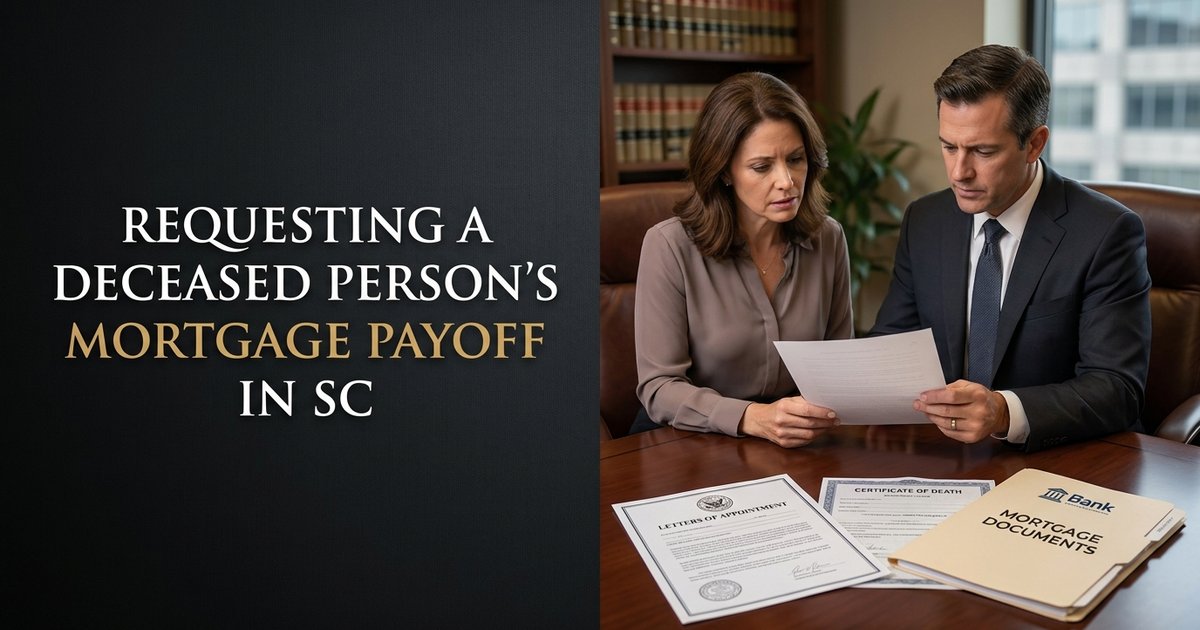
In South Carolina, the request should come from the court-appointed personal representative or from an attorney authorized by that personal representative. A lender usually will not release a deceased borrower’s payoff, transaction history, or account details based only on a will, a family relationship, or a law firm’s request. Send a formal written request to the lender’s mortgage servicing, deceased borrower, or estate department with certified Letters of Appointment, proof of death, loan-identifying information, and a signed authorization if counsel is making the request.
Understanding the Problem
In South Carolina probate, the key question is whether the person requesting the mortgage payoff or account history has authority to act for the deceased borrower’s estate. The actor is the personal representative, or counsel acting for that personal representative. The action is a formal request to the lender for account information needed to administer the estate, protect estate property, and determine the mortgage balance.
Apply the Law
South Carolina law gives authority to a personal representative only after the probate court appoints that person, the person qualifies, and the court issues letters. South Carolina uses the term “personal representative” for the estate fiduciary, whether the person might commonly be called an executor or administrator. A will may nominate someone, but the nomination alone does not give that person full authority to demand private mortgage records from a lender.
Once appointed, the personal representative must manage, protect, and preserve estate property. That duty includes identifying debts tied to estate assets, such as a mortgage on real property. The personal representative also must prepare an inventory that lists probate property and identifies the type and amount of any encumbrance, which makes a mortgage payoff or account history important in many estates.
Key Requirements
- Probate authority: The requester should have certified Letters of Appointment from the South Carolina Probate Court showing authority to act for the estate.
- Proof of death and identity: The request should include a death certificate, the decedent’s name, the property address, and enough loan information for the lender to locate the account.
- Attorney authorization: If a law firm sends the request, the personal representative should sign a written authorization allowing the lender to communicate with counsel.
- Specific written request: The letter should ask for the exact records needed, such as a payoff statement good through a stated date, payment history, escrow history, loan status, reinstatement amount, or correspondence address for estate matters.
- Secure delivery to the right department: The request should go to the lender’s verified mortgage servicing, estate, deceased borrower, or loss mitigation channel. South Carolina law does not create one universal email or fax number for all lenders.
What the Statutes Say
- S.C. Code Ann. § 62-3-103 (Necessity of appointment for administration) – a person must be appointed, qualify, and receive letters to acquire the powers of a personal representative.
- S.C. Code Ann. § 62-3-703 (General duties of personal representative) – the personal representative acts as a fiduciary and must settle and distribute the estate efficiently and in the estate’s best interests.
- S.C. Code Ann. § 62-3-706 (Inventory and appraisement) – within 90 days after appointment, the personal representative must prepare and file an inventory that includes probate property and any encumbrances.
- S.C. Code Ann. § 62-3-709 (Possession and control of estate property) – the personal representative has the right to control estate property when needed for administration and must protect and preserve it.
- S.C. Code Ann. § 62-3-814 (Encumbered assets) – the personal representative may deal with mortgaged or liened estate assets when doing so serves the estate’s best interests.
Analysis
Apply the Rule to the Facts: A law firm handling a South Carolina estate should first confirm that a personal representative has been appointed and has current Letters of Appointment. If the firm believes the decedent had a mortgage or other account with a lender, the request should identify the decedent, the property, and the suspected account, and it should include the personal representative’s written authorization. The lender may properly refuse to send a payoff statement or account history if the request lacks letters, proof of death, or a clear authorization to communicate with counsel.
A neutral example shows the difference. If the personal representative sends certified letters, a death certificate, and a signed request for a payoff good through a certain date, the lender has the basic authority documents needed to review the request. If a relative sends only a copy of the will naming that person, the lender may decline because South Carolina authority begins with appointment and letters, not nomination alone.
Process & Timing
- Who files: The personal representative, or the attorney for the personal representative. Where: Send the request to the lender’s verified mortgage servicing, deceased borrower, estate, or loss mitigation department; if no personal representative has been appointed, open or continue the estate in the South Carolina Probate Court for the county of the decedent’s domicile, or, if the decedent was not domiciled in South Carolina, in a county where the decedent’s South Carolina property was located. What: Include certified Letters of Appointment, proof of death, the personal representative’s contact information, a signed authorization for counsel, the property address, available loan identifiers, and a request for the specific payoff or history needed. When: Send the request promptly after appointment so the estate can meet the 90-day inventory deadline.
- Confirm the delivery channel: Because lenders use different procedures, call the published customer service or servicing line to verify the correct estate-related mailing address, secure upload process, email, or fax before sending sensitive documents. Keep proof of delivery and a copy of every document sent.
- Follow up in writing: If the lender does not respond within a reasonable business timeframe, send a written follow-up that repeats the authority documents and asks whether any specific form, privacy authorization, or successor-in-interest review is required.
- Use the response in the probate administration: The payoff and account history help the personal representative identify the mortgage balance, determine whether payments are current, prepare the inventory, evaluate claims, and decide whether the estate should keep, sell, or otherwise deal with the property. For a deeper look at timing before a probate closing, see getting a mortgage payoff statement in time for a South Carolina probate closing.
Exceptions & Pitfalls
- A will is not enough by itself: A will may name a person to serve, but the lender usually needs court-issued letters before releasing private account information.
- A law firm request still needs client authority: Counsel should include the personal representative’s signed authorization so the lender can communicate directly with the firm.
- Use verified contact information: Do not send death certificates, letters, or account identifiers to an unverified email or fax. Confirm the lender’s estate or mortgage servicing channel through a reliable source before sending sensitive documents.
- Ask for a written payoff, not an oral balance: A payoff statement may include interest through a certain date, escrow items, fees, per diem interest, and delivery instructions. An oral balance may not be enough for closing or estate accounting.
- Do not assume the mortgage lien disappears if no claim is filed: South Carolina’s probate claim rules do not necessarily bar a lender from enforcing a mortgage or other security interest against the property. The estate should treat secured debts carefully.
- Watch real estate authority: If the estate plans to sell real property to pay the mortgage, the personal representative may need will authority, consent, or probate court approval depending on the facts. For more detail, see South Carolina probate court approval to sell a house and pay off the mortgage.
- Keep payment status separate from information access: A lender’s refusal to release records without letters does not stop late charges or default risk. If the account may be delinquent, the personal representative should address payment and preservation issues promptly after authority is in place.
Conclusion
To get a deceased person’s mortgage payoff statement or account history in South Carolina, the request should come from the appointed personal representative or authorized estate counsel. The request should include Letters of Appointment, proof of death, identifying loan information, and a signed authorization for counsel. The single next step is to send a written request to the lender’s verified estate or mortgage servicing channel promptly after appointment, ideally before the 90-day probate inventory deadline.
Talk to a Probate Attorney
If the estate needs mortgage payoff information, account history, or lender communication after a borrower’s death, our firm has experienced attorneys who can help identify the proper authority documents, prepare the request, and track the probate timelines that affect the estate.
Disclaimer: This article provides general information about South Carolina law based on the single question stated above. It is not legal advice for your specific situation and does not create an attorney-client relationship. Laws, procedures, and local practice can change and may vary by county. If you have a deadline, act promptly and speak with a licensed South Carolina attorney.

