
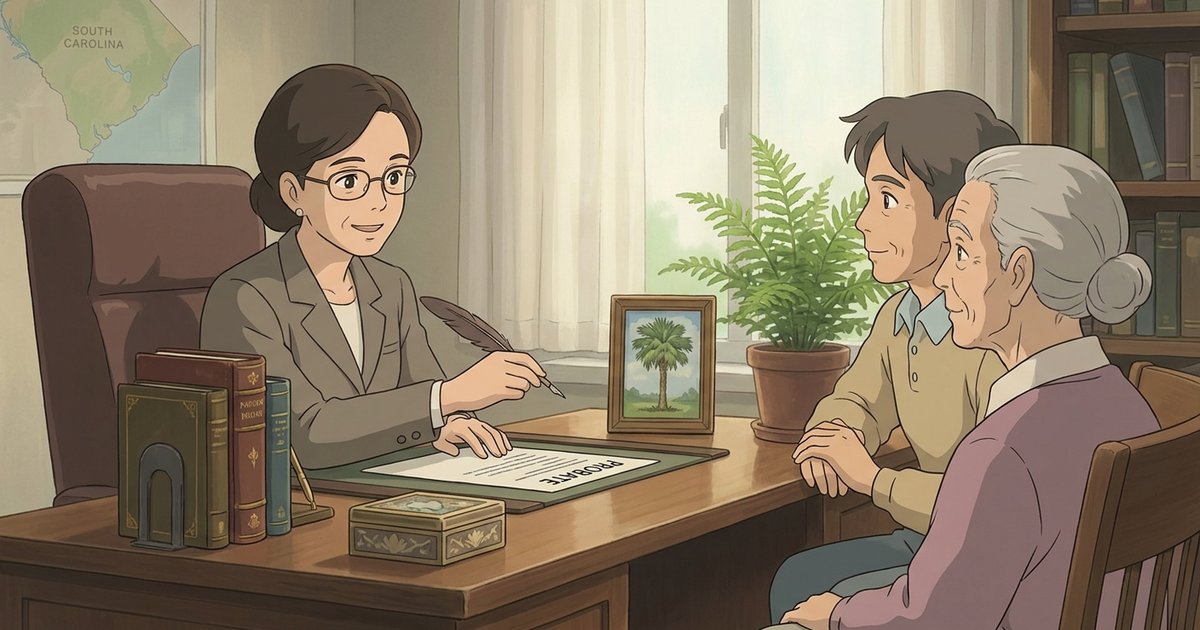
How do I claim money being held by the state treasury or unclaimed property office for a deceased family member when I have power of attorney for a living relative? – South Carolina
Short Answer
In South Carolina, a power of attorney for a living relative usually does not let an agent claim unclaimed property that belongs to a deceased person. Once the owner died, the right to collect that property generally belongs to the deceased person’s estate, acting through a duly appointed personal representative, or in limited situations through a small-estate procedure. The South Carolina State Treasurer handles unclaimed property claims, but the claimant must prove the legal right to receive the funds.
Understanding the Problem
The issue is whether an agent acting under a South Carolina power of attorney for a living relative can collect money held by the State Treasurer when the reported owner is a deceased family member. The key decision point is who has legal authority to claim the property after the owner’s death and whether probate, estate appointment, or another estate procedure is required before the claim can move forward.
Apply the Law
South Carolina treats unclaimed property as property held in state custody until the proper owner or legal claimant proves entitlement. For property tied to a deceased owner, the main question is not whether a family member is related to the decedent, but whether that person has legal authority to act for the decedent’s estate. A power of attorney works for a living principal; after death, estate authority usually shifts to a personal representative appointed through the probate court. The usual forum is the South Carolina probate court in the county with estate jurisdiction, while the claim itself is submitted to the South Carolina State Treasurer’s unclaimed property program. South Carolina law also requires holders to report abandoned property to the administrator, generally before November 1 each year as of the preceding June 30, which explains why funds often appear in the Treasurer’s system after a delay.
Key Requirements
- Proper claimant: The claimant must show a legal right to the property, usually as the owner, the owner’s estate through a personal representative, or another person the Treasurer accepts under its claim rules.
- Death changes authority: A power of attorney for a living relative does not normally replace estate authority once the property owner has died. The estate’s personal representative usually collects and administers the asset.
- Proof and probate documents: The claim usually requires supporting records such as a death certificate, letters of appointment, proof of relationship, and documents linking the deceased owner to the reported property.
What the Statutes Say
- S.C. Code Ann. § 27-18-180 (Report of unclaimed property; notice to apparent owner) – explains how abandoned property is reported to the State and identifies the information holders must provide.
- S.C. Code Ann. § 27-45-100 (Application of chapter) – states that this chapter controls the procedure and disposition of covered property.
- S.C. Code Ann. § 62-8-110 (Termination of power of attorney or agent’s authority) – states that a power of attorney terminates when the principal dies.
Analysis
Apply the Rule to the Facts: Here, the agent holds a power of attorney for a living relative, but the property appears to relate to multiple deceased family members. That usually means the power of attorney may help the agent act for the living relative’s own interest in a claim, such as signing claim paperwork for that living principal, but it does not by itself let the agent stand in the place of each deceased owner. If the unclaimed property is listed under a deceased person’s name, the safer rule is that the estate must claim it through a personal representative unless the Treasurer accepts a narrower heirship or small-estate path.
If one deceased family member owned the funds and the living relative is the sole heir, the agent may still need probate authority before the Treasurer will release the money. If the property instead belongs directly to the living relative but was misreported under an older family record, the power of attorney may be enough to pursue that living relative’s claim with identity and ownership proof. The separate life insurance dispute should be treated as a different issue because insurance beneficiary rights and unclaimed property claims often follow different rules and documents. For more on related estate recovery issues, see how to claim unclaimed property and insurance proceeds owed to an estate in South Carolina probate and how to verify whether a deceased person had additional insurance policies that could affect an estate settlement in South Carolina.
Process & Timing
- Who files: usually the deceased owner’s personal representative, or in some cases a qualifying successor or agent for a living claimant. Where: first with the South Carolina probate court for estate authority if needed, then with the South Carolina State Treasurer’s unclaimed property office. What: the Treasurer’s claim submission plus supporting records such as the death certificate, letters of appointment, proof of identity, and documents connecting the owner to the property. When: file as soon as authority and records are available; delays often happen when no estate has been opened or when multiple deceased relatives are involved.
- Next, the Treasurer reviews the claim and may request more proof, especially if names, addresses, or family relationships do not match the reported record. County probate practice and document requirements can vary, and a small-estate option may be available in some estates depending on the asset mix and probate posture.
- Final step: once the Treasurer accepts the claim, the office issues payment to the approved claimant or estate. If the estate receives the funds, the personal representative must handle them as estate assets and distribute them through the probate process.
Exceptions & Pitfalls
- A living relative’s power of attorney may allow action only for that living principal’s own claim, not for property owned by a deceased person.
- A common mistake is assuming family relationship alone is enough. The Treasurer often needs estate papers or other formal proof of entitlement before releasing funds.
- Name mismatches, missing death certificates, unclear heirship, and mixing the unclaimed property issue with a separate life insurance dispute can slow or block payment. Keep each claim tied to the correct owner and provide notice and probate filings in the proper county when estate administration is required.
Conclusion
In South Carolina, a power of attorney for a living relative usually does not authorize collection of unclaimed property owned by a deceased family member. The controlling issue is legal authority after death, which usually means a personal representative must act for the estate and submit proof to the State Treasurer. The next step is to determine the listed owner of each asset and, if the owner is deceased, file for estate authority in the proper probate court before submitting the Treasurer claim.
Talk to a Probate Attorney
If a family is trying to recover unclaimed property tied to deceased relatives while also sorting out probate authority and insurance issues, our firm can help identify the proper claimant, gather the right records, and explain the deadlines and procedures that apply in South Carolina.
Disclaimer: This article provides general information about South Carolina law based on the single question stated above. It is not legal advice for your specific situation and does not create an attorney-client relationship. Laws, procedures, and local practice can change and may vary by county. If you have a deadline, act promptly and speak with a licensed South Carolina attorney.

