
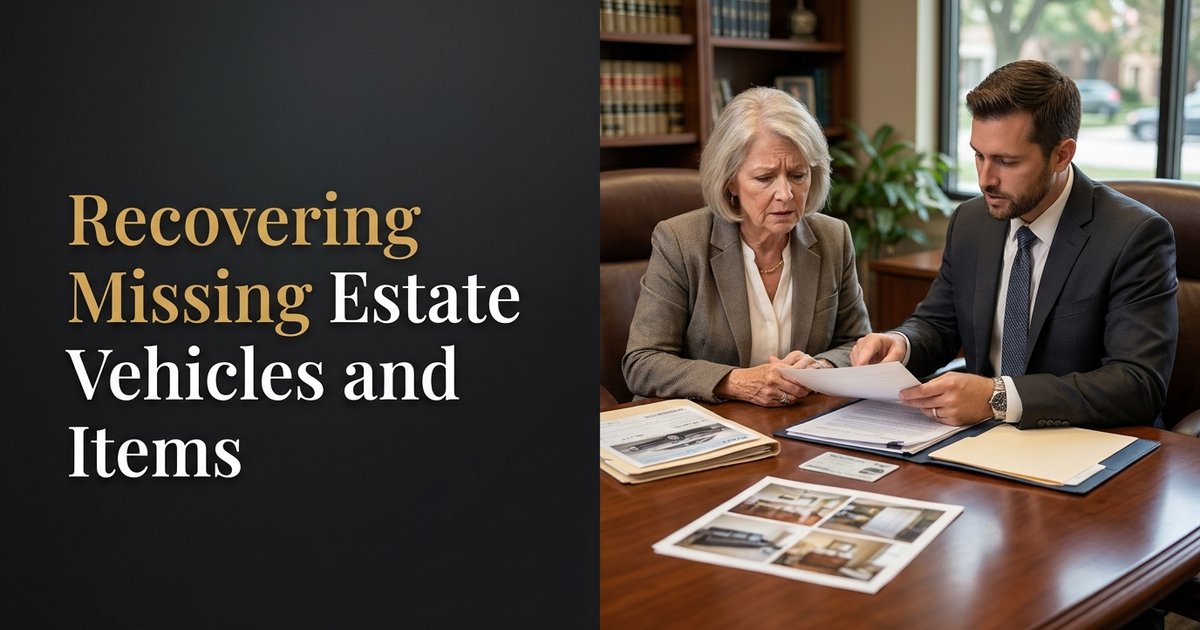
What can beneficiaries do if a vehicle and household belongings are removed before the estate is distributed? – South Carolina
Short Answer
South Carolina beneficiaries can ask the Probate Court to require an inventory and accounting, stop further transfers, recover estate property or its value, and address any loss caused by the personal representative. If the personal representative mismanaged the estate or failed to perform required duties, a beneficiary may also seek removal and appointment of a successor.
Understanding the Problem
The issue is whether a South Carolina beneficiary can protect a vehicle and household belongings that may belong to an estate when the personal representative or another beneficiary removes them before distribution. The answer depends on ownership, the will, the estate inventory, and whether the personal representative properly possessed, sold, transferred, or distributed the property. The Probate Court handling the estate can review those actions and order appropriate relief.
Apply the Law
In South Carolina, an executor appointed by the Probate Court is called a personal representative. The personal representative acts as a fiduciary and must protect estate property, follow the will, account for estate transactions, and distribute the estate efficiently. Possessing a vehicle or moving furnishings for safekeeping is not automatically improper, but the property must remain traceable and must be handled for the estate’s benefit.
Key Requirements
- Property must belong to the probate estate: The vehicle’s title and the ownership of each household item matter. Property owned jointly, held in a trust, transferred by a valid beneficiary designation, or owned by someone else may not be a probate asset.
- The inventory must identify estate property: The personal representative generally must file an inventory and appraisement within 90 days after appointment. It should describe probate assets with reasonable detail, state date-of-death values, and identify encumbrances.
- The personal representative must preserve and account for assets: Estate property may be collected, stored, sold, or distributed only through proper administration. The accounting should show what happened to property and disclose sale proceeds, distributions, expenses, and losses.
- Court relief requires evidence of risk or improper conduct: A beneficiary seeking emergency restrictions should identify the property, explain the threatened harm, and provide available photographs, title records, messages, receipts, witness information, or prior item lists.
A final accounting is generally required after the applicable claims and related proceedings have reached the stage specified by statute, unless the interested parties validly waive it or a statutory exception applies. South Carolina does not ordinarily require annual accountings, but the Probate Court may order an accounting when necessary. More information appears in this article about beneficiary notice and accounting rights.
What the Statutes Say
- S.C. Code Ann. § 62-3-703 (Fiduciary duties) – Requires the personal representative to settle and distribute the estate according to the will and the estate’s best interests.
- S.C. Code Ann. § 62-3-706 (Inventory and appraisement) – Generally requires a detailed inventory of probate property within 90 days after appointment.
- S.C. Code Ann. § 62-3-709 (Possession and preservation) – Authorizes the personal representative to control estate property and requires reasonable steps to protect it.
- S.C. Code Ann. § 62-3-607 (Order restraining personal representative) – Allows an interested person to seek a temporary order preventing conduct that unreasonably jeopardizes an estate interest.
- S.C. Code Ann. § 62-3-611 (Removal for cause) – Permits removal for mismanagement, failure to perform duties, disregard of court orders, or other statutory cause.
- S.C. Code Ann. § 62-3-712 (Liability for improper exercise of power) – Makes a personal representative liable for loss caused by a breach of fiduciary duty.
- S.C. Code Ann. § 62-3-1001 (Accounting and settlement) – Requires closing filings and allows an interested person to seek an order compelling overdue duties.
Analysis
Apply the Rule to the Facts: The vehicle and furnishings should appear on the inventory and accounting if the decedent owned them as probate property. The personal representative may take custody of the vehicle for protection, but must preserve it, document its value, and account for any use, sale, or distribution. Missing furnishings and an overdue final accounting support requesting records and court review, although removal from the house alone does not prove that the property was stolen or improperly distributed. The beneficiary occupying the house does not gain ownership of its contents merely by possessing them.
The beneficiary should compare the filed inventory with vehicle title records, photographs, insurance documents, receipts, and lists of household contents. Written requests should ask where the items are stored, whether any items were sold or given away, who received them, and where any proceeds were deposited. Beneficiaries should not enter the property or attempt to recover disputed items through self-help.
Process & Timing
- Who files: An interested beneficiary. Where: The South Carolina Probate Court administering the estate, usually in the county where the decedent was domiciled. What: Depending on the circumstances, a demand for notice, a request or petition for an accounting, an application to restrain specified acts, or a petition to remove the personal representative. When: The inventory generally must be filed within 90 days after the personal representative’s appointment, and urgent relief should be requested before property is sold, transferred, or lost.
- Notice and initial review: The beneficiary should provide the personal representative with the required pleadings and notice. For an application to restrain the personal representative, the court sets the matter for a hearing within 10 days unless the parties agree to another time.
- Accounting and final relief: The court may order a complete accounting, restrict transactions, require return of property or proceeds, assess responsibility for proven losses, or remove the personal representative for statutory cause. If removal occurs, a successor personal representative can take control of the remaining assets and continue administration.
Exceptions & Pitfalls
- Possession is not necessarily ownership: A vehicle may pass outside probate depending on its title, while household goods may belong to another person or pass under a specific provision of the will.
- Removal can serve a proper estate purpose: The personal representative may move property to secure, insure, appraise, or sell it. The concern arises when the representative cannot document the location, authority, proceeds, or distribution.
- Personal-property sales can require court approval: Unless the will provides otherwise, the personal representative generally may not sell estate personal property with an aggregate value of $10,000 or more without a prior court order. A conflicted transaction may also be voidable unless the will authorized it, the court approved it after notice, or affected persons consented after fair disclosure.
- Do not consent without adequate disclosure: Signing a waiver, receipt, accounting approval, or settlement document may limit later objections. Each listed asset and transaction should be reviewed first.
- Document missing items carefully: Broad accusations carry less weight than an itemized list supported by photographs, title records, serial numbers, valuations, messages, or witnesses.
- Request notice formally: A demand for notice filed with the Probate Court lasts one year and may need renewal. Informal emails alone do not provide the same statutory protection.
Related guidance is available on documenting estate items before removal and removing an uncooperative personal representative.
Conclusion
South Carolina beneficiaries may seek court protection when an estate vehicle or household belongings disappear before distribution. The key issues are whether the decedent owned the property, whether it appeared on the inventory due within 90 days after appointment, and whether the personal representative preserved and accounted for it. File an appropriate application or petition with the Probate Court handling the estate promptly if property remains at risk or required accounting documents are overdue.
Talk to a Probate Attorney
If estate property has disappeared, an accounting remains overdue, or further transfers appear likely, our firm has experienced attorneys who can help evaluate ownership records, court filings, available remedies, and important timelines.
Disclaimer: This article provides general information about South Carolina law based on the single question stated above. It is not legal advice for your specific situation and does not create an attorney-client relationship. Laws, procedures, and local practice can change and may vary by county. If you have a deadline, act promptly and speak with a licensed South Carolina attorney.

