
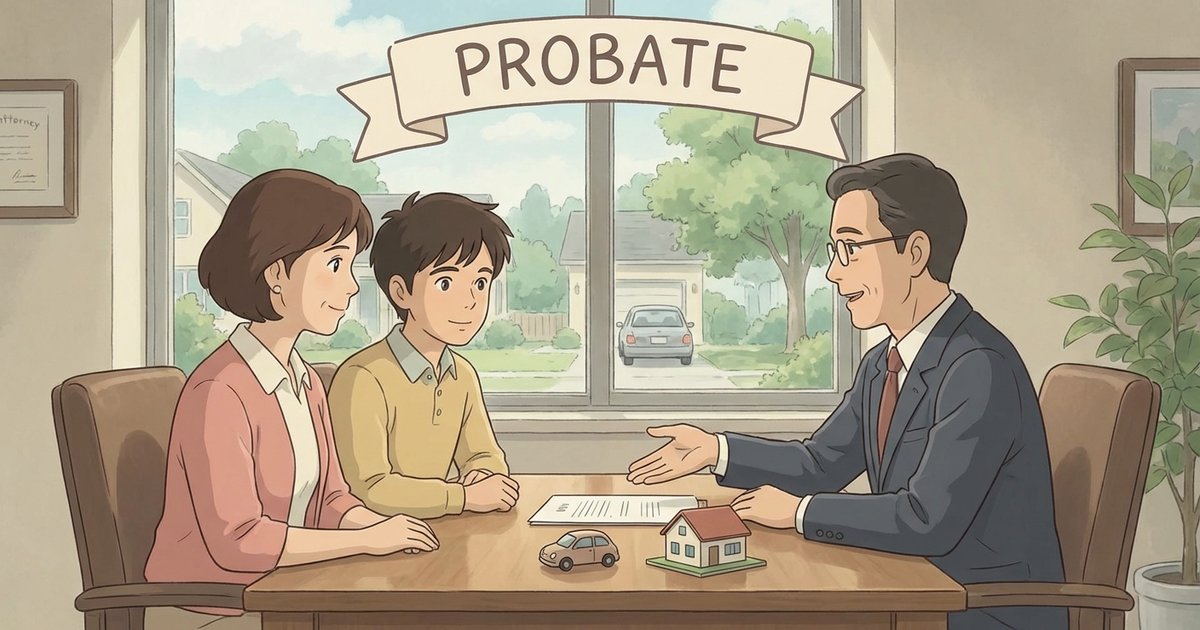
Can I transfer the house and car solely into my name without formal probate?: North Carolina – South Carolina
Short Answer
In South Carolina, a car can sometimes be transferred without opening a full (“formal”) probate case, but it depends on how the car is titled and the size of the probate estate. South Carolina allows collection of certain personal property by a court-approved small estate affidavit when the entire probate estate is at or below a statutory dollar limit and other requirements are met. A house is different: real estate usually cannot be put solely into one person’s name without some probate-court process or a recorded instrument that proves the new owner’s title.
Understanding the Problem
The question is whether, under South Carolina probate law, a surviving family member can move ownership of two common assets—a house and a car—into a single person’s name without going through a formal probate administration. The key decision point is whether each asset is part of the decedent’s probate estate or passes outside probate by the way it is titled or by a simplified probate-court procedure. The answer often differs for a vehicle (titled personal property) versus real estate (a home), and it also depends on whether there are other heirs with rights in the property.
Apply the Law
In South Carolina, “formal probate” is not always required to deal with a decedent’s property, but some court involvement is still common. For personal property, South Carolina has a small-estate affidavit process that can allow a successor to collect certain property after a short waiting period if the probate estate is under a set value and no personal representative has been appointed. For titled items like vehicles, South Carolina also recognizes transfer-on-death (TOD) designations on titles (effective July 1, 2025) that can pass the vehicle outside estate administration when properly set up.
Key Requirements
- Probate vs. non-probate ownership: If the house or car is already set up to pass automatically (for example, survivorship titling or a valid beneficiary-style transfer where allowed), it may transfer without a full probate administration. If it is solely in the decedent’s name with no automatic transfer feature, it is usually a probate asset.
- Small-estate threshold and timing: For collection by affidavit, the entire probate estate (minus liens/encumbrances) must be at or below the statutory cap, and at least 30 days must have passed since death.
- No personal representative appointment pending or granted: The affidavit procedure is designed for estates where no probate administration is already underway.
What the Statutes Say
- S.C. Code Ann. § 62-3-1201 (Collection of personal property by affidavit) – Allows collection of certain personal property by a probate-court-approved affidavit if the entire probate estate is within the statutory limit, 30 days have passed, and no personal representative has been appointed.
- S.C. Code Ann. § 62-3-1203 (Small estates; summary administrative procedure) – Allows a streamlined administration and quick distribution when the estate is within the statutory limit (this still involves appointing a personal representative, but it is not a lengthy “formal” process in many cases).
- S.C. Code Ann. § 62-6-401 (Transfer on death for titled personal property) – Authorizes TOD designations for vehicles and other titled personal property (effective July 1, 2025), which can transfer the vehicle outside estate administration when properly titled.
Analysis
Apply the Rule to the Facts: With no additional facts provided, the outcome turns on (1) how the house deed is titled, (2) how the car title is titled, and (3) whether the probate estate is small enough to qualify for South Carolina’s simplified procedures. If the car is solely in the decedent’s name and the estate is under the small-estate cap, the affidavit process may allow transfer of the vehicle without opening a full probate case. If the house is solely in the decedent’s name, a title company and the Register of Deeds typically require probate-court documentation (or another legally recognized title-transfer instrument) before the home can be put solely into one person’s name.
Process & Timing
- Who files: The successor/heir (or a person who paid reasonable funeral expenses, in appropriate cases). Where: South Carolina Probate Court in the county where the decedent was domiciled (or where the property is located if the decedent was not domiciled in South Carolina). What: A small-estate affidavit for collection of personal property that the probate judge approves and countersigns. When: At least 30 days after death, and only if no personal representative appointment is pending or granted.
- Vehicle transfer step: After the affidavit is approved, it is presented to the person or institution holding the property (and, for a vehicle, the title transfer is handled through the appropriate titling process). If the vehicle was titled with survivorship features or a valid TOD designation (when available and properly used), different paperwork may apply and probate may not be needed for that vehicle.
- House transfer step: If the home is a probate asset, the usual path is opening an estate in Probate Court so a personal representative can transfer or distribute the real estate, followed by recording the appropriate deed or court-authorized instrument in the county land records. If the home already passes outside probate (for example, by survivorship deed), the transfer is typically handled through land-record filings rather than estate administration.
Exceptions & Pitfalls
- Real estate is often the deal-breaker: Even when a vehicle can be handled through a small-estate affidavit or survivorship titling, a house titled only in the decedent’s name often still requires opening an estate (or another recognized title-clearing process) to create recordable proof of ownership.
- Small-estate cap applies to the entire probate estate: The affidavit procedure looks at the value of the entire probate estate (minus liens/encumbrances), not just the car. If the house is a probate asset, it can push the estate over the cap and make the affidavit route unavailable.
- Heirship disputes and creditor issues: If there are multiple heirs, unclear family relationships, or known debts, trying to “transfer into one name” without a proper probate process can create title problems and personal liability risks.
Conclusion
In South Carolina, transferring a car into one person’s name may be possible without a full probate administration if the vehicle passes outside probate by its titling or if the estate qualifies for the court-approved small-estate affidavit process, which generally requires waiting at least 30 days after death. A house is usually harder to transfer without probate because land records typically require probate-backed proof of title when the deed is only in the decedent’s name. The most practical next step is to file the appropriate paperwork with the Probate Court in the decedent’s county to confirm whether the small-estate process applies.
Talk to a Probate Attorney
If a house and car need to be moved into one person’s name after a death, a probate attorney can review how each asset is titled, confirm whether the small-estate affidavit or a simplified administration is available, and help avoid title and creditor problems. For more detail on the vehicle side of the process, see the South Carolina small estate procedure and how vehicle title transfer can work using an affidavit for collection.
Disclaimer: This article provides general information about South Carolina law based on the single question stated above. It is not legal advice for your specific situation and does not create an attorney-client relationship. Laws, procedures, and local practice can change and may vary by county. If you have a deadline, act promptly and speak with a licensed South Carolina attorney.

