
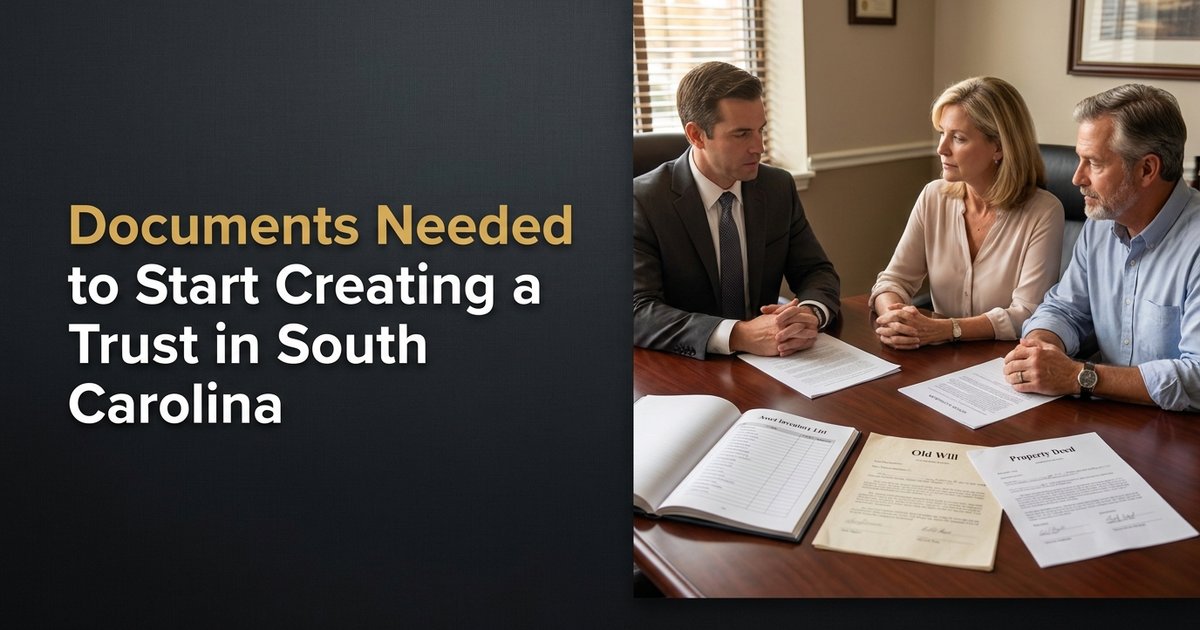
What information and documents do I need to get started with creating a trust? – South Carolina
Short Answer
To get started with creating a trust in South Carolina, gather a clear list of assets, current ownership records, beneficiary information, and the names of trusted people or institutions who could serve as trustee or successor trustee. South Carolina law requires capacity, intent to create the trust, identifiable trust property, a proper beneficiary or valid purpose, trustee duties, and separation between the sole trustee and sole current and future beneficiary. The planning process usually starts with reviewing existing estate documents and financial information before drafting and signing the trust.
Understanding the Problem
In South Carolina, a person creating a trust must decide what property should go into the trust, who should manage it, who should receive benefits from it, and when the trust should take effect. This question focuses on the information and documents needed at the start of the Estate Planning process so the trust can be drafted, signed, and funded correctly.
Apply the Law
South Carolina trust law does not require a court case to create most revocable living trusts. The core legal issue is whether the trust document meets the South Carolina Trust Code and whether the assets are properly connected to the trust. A trust that is never funded, or never named to receive assets, may not accomplish the intended plan.
Before drafting begins, the planning attorney usually needs three categories of information: personal planning choices, asset information, and existing legal documents. This allows the trust to identify the settlor, trustee, beneficiaries, trustee powers, distribution terms, and the property or property interests the trust will hold.
For a broader comparison of when a trust may fit better than a will, see Wills vs. Trusts in South Carolina.
Key Requirements
- Capacity: The person creating a revocable trust must have the same legal capacity needed to make a will.
- Intent: The trust document must show a clear intent to create a trust, not just a wish or informal instruction.
- Trust property: The trust must be tied to identifiable property, either at signing or through later funding.
- Beneficiaries or valid purpose: The trust must name definite beneficiaries or fit a recognized purpose, such as a charitable purpose or pet trust.
- Trustee duties: The trustee must have real duties to perform, such as managing assets, paying expenses, or distributing property.
- No complete merger: The same person cannot be the sole trustee and the sole current and future beneficiary.
What the Statutes Say
- S.C. Code Ann. § 62-7-401 (Methods of creating a trust) – A trust may be created by transferring property to a trustee, by a written declaration that the owner holds property as trustee, or by exercising a power of appointment.
- S.C. Code Ann. § 62-7-402 (Requirements for creation) – A trust requires capacity, intent, a definite beneficiary or valid purpose, trustee duties, and separation between sole trustee and sole beneficiary roles.
- S.C. Code Ann. § 62-7-601 (Capacity for revocable trust) – The capacity required to create, amend, revoke, or fund a revocable trust is the same capacity required to make a will.
- S.C. Code Ann. § 26-2-200 (Electronic notary applicability) – South Carolina’s electronic notary chapter does not apply to wills and trusts, so signing procedures should be handled carefully.
Analysis
Apply the Rule to the Facts: The client wants to set up a trust, so the first step is gathering enough information to show capacity, intent, beneficiaries, trustee duties, and trust property. A complete asset list and existing estate documents help the attorney decide how the trust should be drafted and what must be retitled or updated after signing. If the client owns a home, financial accounts, life insurance, or retirement accounts, each asset may require a different funding step.
Information to Gather Before the First Meeting
- Basic family and beneficiary information: Names and relationships of spouse, children, other beneficiaries, and alternate beneficiaries.
- Trustee choices: The first trustee, successor trustees, and backups if the first choices cannot serve.
- Distribution instructions: Who receives trust property, when they receive it, and whether any beneficiary should receive property in stages or under trustee management.
- Special concerns: Minor beneficiaries, disability-related planning, blended family concerns, creditor concerns, pets, charitable gifts, or beneficiaries who may need help managing money.
- Asset list: Real estate, bank accounts, investment accounts, business interests, vehicles, valuable personal property, life insurance, retirement accounts, and digital asset information.
- Debt and obligation list: Mortgages, loans, personal guarantees, support obligations, and other major liabilities.
- Privacy and administration goals: Whether the main concern is incapacity planning, avoiding probate administration for certain assets, simplifying management, or coordinating property in more than one county or state.
Documents to Bring or Collect
- Existing estate planning documents: Prior wills, trusts, codicils, powers of attorney, health care directives, and beneficiary forms.
- Real estate documents: Deeds, recent tax bills, mortgage information, and any documents showing joint ownership or life estate interests.
- Financial account statements: Bank, brokerage, savings, certificate of deposit, and other account statements showing current ownership and approximate values.
- Beneficiary designation records: Life insurance, retirement accounts, payable-on-death accounts, transfer-on-death accounts, and annuity beneficiary forms.
- Business records: Operating agreements, shareholder agreements, buy-sell agreements, or ownership records for closely held business interests.
- Insurance information: Life insurance policies and long-term care or disability coverage documents if they affect planning choices.
- Marital or family agreements: Prenuptial agreements, postnuptial agreements, separation agreements, or divorce orders if they affect property rights or beneficiary choices.
- Prior gift or inheritance documents: Documents showing inherited property, restricted gifts, or property held with others.
A trust-centered plan often includes more than the trust itself. Many South Carolina plans also use a pour-over will, financial power of attorney, health care power of attorney, and related transfer documents. For more on companion documents, see Which Estate Planning Documents Should Be in Place in South Carolina?.
Process & Timing
- Who files: Usually no one files a revocable living trust with a court when it is created. Where: The trust is prepared and signed through the estate planning process in South Carolina; real estate funding documents may be recorded with the register of deeds or clerk of court in the county where the property is located. What: The main document is the trust agreement or declaration of trust, often with a pour-over will, powers of attorney, health care documents, deeds, and beneficiary updates. When: The trust should be signed and funded while the settlor has legal capacity; there is no routine court filing deadline for creating a revocable trust.
- Planning meeting and draft review: The attorney reviews the asset list, current documents, beneficiary goals, and trustee choices. Drafts are then prepared and reviewed for names, roles, distribution terms, and funding instructions. Timing varies by complexity and county recording needs.
- Signing and funding: The settlor signs the trust using proper South Carolina procedures. After signing, assets must be retitled, assigned, or coordinated by beneficiary designation when appropriate. The expected result is a signed trust document and a funding plan that connects selected assets to the trust.
Exceptions & Pitfalls
- Unfunded trust: A signed trust may not control assets that remain outside the trust and lack a beneficiary designation pointing to the trust.
- Wrong ownership assumptions: Joint accounts, beneficiary-designated assets, and retirement accounts may pass outside the trust unless coordinated carefully.
- Real estate issues: Deeds may be needed to fund real property into the trust. County recording practices and mortgage or title concerns should be reviewed before transfer.
- One person in every role: South Carolina law does not allow the same person to be the sole trustee and sole current and future beneficiary, so successor or remainder beneficiary planning matters.
- Incapacity planning gap: A trust helps only with assets it controls. Financial powers of attorney and health care documents often remain important.
- Tax-related questions: Trust choices can have tax consequences. A tax attorney or CPA should review tax questions before documents are signed or assets are moved.
- Electronic signing mistake: South Carolina’s electronic notary law does not apply to wills and trusts, so signing should follow procedures appropriate for estate planning documents.
Conclusion
To get started with creating a trust in South Carolina, gather current estate documents, a detailed asset list, beneficiary information, trustee choices, and records showing how property is titled. South Carolina law requires capacity, intent, trust property, beneficiaries or a valid purpose, and trustee duties. The next step is to provide those documents to a South Carolina estate planning attorney before signing or retitling assets, while capacity is clear.
Talk to a Estate Planning Attorney
If you’re preparing to create a trust in South Carolina, our firm has experienced attorneys who can help organize the documents, explain trustee and beneficiary choices, and build a timeline for signing and funding the trust.
Disclaimer: This article provides general information about South Carolina law based on the single question stated above. It is not legal advice for your specific situation and does not create an attorney-client relationship. Laws, procedures, and local practice can change and may vary by county. If you have a deadline, act promptly and speak with a licensed South Carolina attorney.

